
GoGreen research project helps Monsenso enter new markets

GoGreen research project helps Monsenso enter new markets

GoGreen research project helps Monsenso expanding into new markets. Monsenso is pleased to announce that it is partnering with a pan-European consortium in the Go Green Routes research project supported by the Horizon 2020 programme. The consortium has been granted EUR 10.49 million from the EU to develop innovative solutions that foster mental health and well-being by optimising human-nature interactions for citizens. These innovations will increase the uptake and acceptability of nature-based solutions across the trial cities Burgas, Lahti, Limerick, Tallinn, Umea and Versailles.

Monsenso’s solution will be further developed and used to both encourage green nature-based choices and to monitor citizens’ mental health to help better understand the health impact of nature-based choices for people in cities. Monsenso’s share of the project contribution will be EUR 253.000.

“Participating in a project that combines nature-based solutions, green choices and mental health and well-being is very exciting for Monsenso. A lot of focus and investment is going into green solutions and technologies these years, and this could represent a great potential for us. Moreover, the project will expand our international network and help bring the Monsenso solution into new markets”. says Thomas Lethenborg, CEO of Monsenso. 

The project will start in September 2020 and is coordinated by the University of Limerick. The project run for four years and includes 40 partners across 18 countries, among others Mental Health Europe, King’s College London, Technical University Munich, Manchester Metropolitan University and universities in Tallinn, Aachen, Torino, Antwerpen, Versailles and Inland Norway as well as the trial cities.

“We envisage that GOGREEN ROUTES will translate cutting edge research into impactful solutions for cities health, mobility and ecology” says Dr Tadhg MacIntyre, lecturer in psychology at the University of Limerick and project lead coordinator.

This project is funded by the European Union’s Horizon 2020 framework programme under grant agreement No 869764.
To read the Danish version, click here.

For additional information contact:
Bettina van Wylich-Muxoll
Chief Marketing Officer
marketing@monsenso.com
Monsenso

Reference
GOGREEN ROUTES Project Outline, click here.
A smartphone app that supports online therapy

A smartphone app that supports online therapy

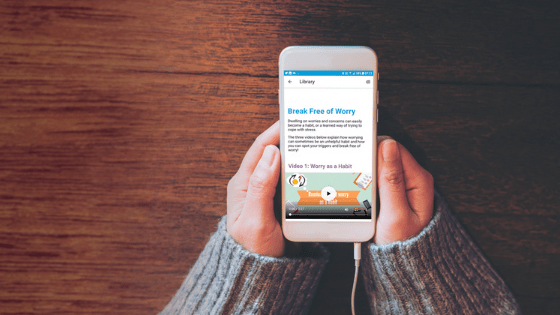
Monsenso offers a smartphone app that supports online therapy by enabling users to share valuable health data with their therapists in real-time.

What is online therapy used for?

Online therapy, also called e-therapy or teletherapy has many advantages and it gives users access to therapy services offered by mental healthcare providers from the comfort of their home. Therapists can use one of the many secure platforms available to connect with their patients through video conference, phone calls or chat functionality.  It also helps reach people who have very busy schedules and can’t spare the commute, or those are not too comfortable with face to face appointments.

Online therapy can be effective to treat many mood and behavioural disorders such as depression, anxiety, bipolar disorder and borderline personality disorder.  In fact, according to research led by McMaster University online therapy can be more effective than in person.

Just as in traditional therapy, it is important that the goals of online therapy are created by both, the therapist and the client.

Online Cognitive Behavioural Therapy

Cognitive behavioral therapy (CBT) is a tool used to treat a number of mental and physical health issues, and due to its flexibility, CBT online offers many of the benefits found in the face-to-face model. CBT is widely available online, so people experiencing unwanted symptoms linked to anxiety, depression, and other conditions should view it as a viable option to treat their overall well-being.

Online Dialectical Behavioural Therapy

Dialectical Behavioural Therapy (DBT)  is a type of therapy that primarily involves skills training such as mindfulness, emotional regulation, and distress tolerance to assist individuals to better manage emotional distress. It also provides problem-solving strategies to identify and alter harmful behaviors and replace them with constructive ones.

An app that supports online treatment

Before using the Monsenso smartphone app to support his therapy, Peter Hagelund, followed the typical therapeutic setting. His psychiatrist would schedule an appointment every two-three weeks, and they would discuss Peter’s previous weeks.  On most occasions, Peter would say that he had been doing fine, but sometimes he forgot important details that he wanted to discuss.

Now, instead of relying on Peter’s memory during the consultation, his psychiatrist can access his data and see how he has been doing, as it happened. He can view how much he has sleept, how much he exercises, how much he drinks, the levels of anxiety he has, and other relevant aspects to his treatment and his disorder.

Mads Trier-Blom, another Monsenso user, said that the app helps him to be more connected with his clinician, Bente, who intervenes when she can see that he is not feeling well, to help him avoid having an episode.

Psychiatrist Kristoffer Södersten from PsykiatriResurs in Sweden says that the accuracy from a diagnosis obtained can very much depend on many factors such as cultural background and how comfortable the patient is in the conversation. Therefore, it can be very arbitrary the diagnosis a patient receives.

The information gathered from the Monsenso smartphone app helps him get a consistent and clearer view of an individual’s mental health. He finds the Monsenso mHealth solution to be particularly helpful in capturing relevant objective data. The solution provides a comprehensive and easily accessible overview of relevant patient data, such as the individual’s overall day score, his mood, the number of hours he slept, and if he took his medication.  The smartphone app also collects sensor data, such as physical activity, social activity, phone usage and voice features which helps to supplement the subjective data provided.

The Monsenso mHealth solution has helped mental healthcare providers to get an overview of an individual’s historical data and correlation analysis. It also helps them identify the triggers and early warning signs everyone has, enabling them to intervene at an early stage before they have an episode, such as in the case of Mads.

Besides, the smartphone app helps users to be more aware of their mood, their symptoms and the reason why these symptoms appear. It also provides them with useful skill-training content to help them deal with stressful situations.

A smartphone app that can help psychiatrists diagnose mental illness

A smartphone app that can help psychiatrists diagnose mental illness

“A smartphone app that can help psychiatrists diagnose mental illness” –  Peter Hagelund, a Monsenso user, speaks about his experience using the Monsenso mobile health solution to support his treatment, and how it has helped  him improve the communication with his psychiatrist.

Prior to using the Monsenso smartphone app, Peter and his psychiatrist followed the typical therapeutic setting, they would schedule an appointment every two-three weeks, and they would have a conversation to discuss Peter’s previous weeks.  Peter would usually say that he had been doing fine for each appointment, but sometimes he forgot important details that he wanted to discuss.

“It can be pretty tricky to remember, two weeks later [between appointments] how you actually felt that day. With the app it’s really easy to go back and see if your mood has been pretty stable over the last two months, or if you had had some ups and downs over a period,” says Peter Hagelund.

Now, instead of relying on Peter’s memory during the appointment, his psychiatrist can access his data and see how he has been doing, as it happened. He can view how much he has been sleeping, how much he exercises, how much he drinks, how much anxiety he has, and other relevant aspects to his treatment and his disorder.

“My psychiatrist now says things like You say you’ve been doing fine, but I can actually see that you’ve had a few ups and downs. I think the app helps him get a real view of how I have been doing,” says Peter Hagelund.

In his Danish documentary series “Jeg savner min sygdom” (which translates to “I miss my illness”), Peter Hagelund talks about his experience of getting the wrong diagnosis and how finally after six years he got the right diagnosis and treatment. 

In 2014, he was diagnosed with Bipolar Disorder Type 2.

During his whole life, he knew there was something different about him. He always struggled with depression and anxiety, and what eventually turned out to be hypomania. When he was 22, he had his first big episode of depression and began taking antidepressants. However, it took six more years before he was officially diagnosed with Bipolar Disorder Type 2.

He says that one of the trickiest things about having this diagnosis is that he does not experience the typical manic episode where a person feels over-energetic and nearly psychotic. Instead, he feels hypomanic, which means that he is socially well functioning. He is not psychotic. He just feels really well; the problem with this, was that he didn’t feel the need to inform his psychiatrist the fact that he was feeling too well. 

His psychiatrist found out that he had Bipolar Disorder was because he couldn’t come out of his depression. At first, he was diagnosed with depression and ADD. But these diagnoses didn’t seem to fit because he still had strong mood swings and a lot of anxiety. When he was diagnosed with Bipolar Disorder Type 2, it actually made sense to him. Suddenly, he could see why he had felt the way he had most of his life.

“I really believe that the Monsenso smartphone app could have helped my psychiatrist give me the right diagnosis at an earlier stage because the app helps me to keep track of my mood and to become more aware of how I feel. With the app, I have to pause and take a moment to think about how I’ve actually been doing before entering my answers. Keeping track of all this information has helped my treatment. My psychiatrist and I can plan better on how to avoid my future depressive or hypomanic episodes because we can clearly identify when I am having mood swings”. says Peter Hagelund.  

In August 2018, his documentary about living with Bipolar Disorder aired on national Danish television and the response was overwhelming. Many people contacted him, to thank him for talking about his illness. He made the documentary so other people who have this illness, do not feel ashamed of it.

“My hope is that in the future people are diagnosed at an earlier stage than I was and I truly believe the Monsenso app is one of the things that can help. I really hope that other psychiatrists and their patients will start using the app,” he added.

Click here to read this story in Danish.

Monsenso receives ISO 27001 re-certification

Monsenso receives ISO 27001 re-certification

Copenhagen, Denmark – 23 July 2020. Monsenso recently received the ISO 27001 re-certification. This is the international standard that describes best practices for an information security management system (ISMS). The company had originally received the ISO 27001 certification in August 2017, and since the certification is valid for three years, the re-certification was due this summer.

Compliance with this certification validates that Monsenso has implemented comprehensive information security practices that protect its users and their information in accordance with internationally recognised standards.

The ISO 27001 standard ensures the secure management of customers’ information, intellectual property, and third party information by establishing methodologies and meeting key objectives for implementing information security.

Monsenso underwent an in-depth assessment by a third-party auditor to validate compliance with this standard. Maintenance of the certification requires an annual review and a three-year re-certification, giving Monsenso users confidence that their data is continuously protected under these standards.

With regards to obtaining the ISO 27001 certification, Thomas Lethenborg, CEO at Monsenso, commented “Data security is critical when dealing with medical information, and the ISO 27001 certification provides our users with the highest level of protection for their most sensitive data.”

For additional information, please contact:
Jennifer Highland
Marketing
Monsenso
+45 30 25 15 26
marketing@monsenso.com

Online therapy can be more effective than in person, according to research

Online therapy can be more effective than in person, according to research

Online therapy can be more effective than in person, according to research led by McMaster University.

Based on randomized control trials, the systematic review and analysis revealed that cognitive behavioural therapy that connected therapists and patients through such modes as web-based applications, video-conferencing, email and texting, improved patients’ symptoms better than face to face when measured using standardized mood symptoms scales. As well, there was no difference in the level of satisfaction or function between the two methods of delivery.

The details were published in EClinicalMedicine, published by The Lancet.

“Although this study started before the current COVID-19 pandemic, it is timely and assuring that treatment delivered electronically works as well if not better than face to face and there is no compromise on the quality of care that patients are receiving during this stressful time,” said corresponding author Zena Samaan, associate professor of psychiatry and behavioural neurosciences at McMaster and a psychiatrist at St. Joseph’s Healthcare Hamilton.

Using online therapy to treat patients with geographical limitations

Cognitive behavioural therapy is a type of psychotherapy widely used to treat depression. However, limited resource availability poses several barriers to patients seeking access to care, including lengthy wait times and geographical limitations.

In this evidence review, researchers identified 17 randomized control trials comparing therapist-supported cognitive behavioural therapy delivered electronically to face to face cognitive behavioural therapy. The studies were conducted between 2003 and 2018 in the United States, Australia, Netherlands, Switzerland, Sweden and the United Kingdom.

Samaan said the findings of the meta-analysis debunk widely-held perceptions about psychotherapy.

“The common understanding was that face to face psychotherapy has the advantage of the connection with the therapist and this connection is in part what makes the difference in treatment,” she said.

“However, it is not surprising that electronic interventions are helpful in that they offer flexibility, privacy and no travel time, time off work, transport or parking costs. It makes sense that people access care, especially mental health care, when they need it from their own comfort space.”

Samaan noted that the findings support advocacy and widespread implementation of electronic cognitive behavioural therapy.

“Electronic options should be considered to be implemented for delivering therapy to patients,” she said. “This can potentially vastly improve access for patients, especially those in rural or under-served areas, and during pandemics.”

This article was published originally by Science Daily, click here to view it.