Monsenso partners with Australian Mental & Social Health Counselling Service Provider On the Line

Monsenso partners with Australian Mental & Social Health Counselling Service Provider On the Line

Monsenso will partner with On the Line to assist counsellors in helping clients self-manage their anxiety, bipolar disorder, borderline personality disorder, depression, post-traumatic stress disorder and schizophrenia.

Copenhagen, Denmark – 19 December 2017 Monsenso, a Danish company developing mobile health solutions for mental health has partnered with On the Line, an Australian social health business. On the Line offers telephone, web chat and video counselling and social media moderation services 24/7 to more than 80, 000 people each year.

Monsenso’s mHealth solution will act as a proactive self-management app to strengthen the support and connection between counsellors and clients with a wide range of affective  and psychotic disorders. Specifically, the solution will offer a detailed routine monitoring system to help On the Line counsellors access detailed information regarding clients. This information will help counsellors  to support clients to better manage their health.

Clients will be able to input mood level, hours slept, medication taken, exercise, stress and more and this data will be fed into the dashboard to give On the Line counsellors a historic overview and analysis for each client.

“Our mHealth solution is the ideal complement to remote  and outpatient care.” said Thomas Lethenborg, CEO of Monsenso, “The live-time data collection and synchronization between clinician and client can help to enhance the quality of psychotherapeutic counselling.”  

On the Line has more than 55 years of experience in delivering mental health services to the community. It is the national provider of some of Australia’s most vital and trusted services, including MensLine Australia, Suicide Call Back Service and SuicideLine Victoria. On the Line helps encourage people to feel better by building resilience, fostering healthy relationships, and connecting people with community support.

“The Monsenso solution will help counsellors to have a clearer picture of how their clients feel on a daily basis. For our clients, it will help them to manage their condition, identify triggers and warning signs and empower them to better manage their social health and wellbeing.” said Kim O’Neill, CEO at On The Line.

Click on this link to read this press release in Danish.

For additional information contact:

Helen Chen
Marketing
Monsenso
+45 30 25 15 26
chen@monsenso.com

How electronic monitoring can assist a psychiatric medication change

How electronic monitoring can assist a psychiatric medication change

In undergoing psychiatric treatment for mental illnesses, it is very common to be prescribed medication. While medication can be an important and helpful part of treatment, the process of finding the right medication for each patient can be a tedious and sometimes hazardous process.  It is common practice for patients with mental illnesses, such as schizophrenia [1] , depression [2]  and bipolar [3], to switch through multiple psychiatric medications.

The Australian Genetics of Depression Survey, which includes 13,000 participants with clinical depression, reported that one in ten participants have used five or more antidepressants during their psychiatric treatment [2] The survey also reported that patients with depression will often cycle through multiple antidepressants using a trial and error approach to find the medication that best suits the patient. [2] However, by using the trial and error methodology, this process can take a very long before benefits are observed [2] and of more concern, patients may experience adverse health side effects from changing and stopping medication.

Adverse side-effects are an unfortunately common occurrence for patients taking psychiatric medication. The Australian Genetics of Depression Survey reported 76% of participants with clinical depression had some medication related side-effects and 38% of participants reported that side-effects of the medication were so severe that they had to either stop or change the medication. Participants in the survey reported antidepressant side-effects of nausea, headaches, drowsiness, and fatigue [2]. Other side-effects of antidepressants may include physical withdrawal pains from forgetting to take medication and ensuing anxiety over forgetting to take the medication again [4].

Adverse side-effects can also occur from abruptly stopping psychiatric medication. This can result in complications such as the rapid return of the illness being treated  [2], mild to moderate discontinuation symptoms[5], or in some severe cases, such as the cessation of a high dose of benzodiazepines, potentially life threatening seizures [5].

Fortunately, these side-effects can be reduced:

Firstly, it is strongly advised to take the medication switching or stopping process gradually, carefully, and slowly. [3] [5]

Secondly, harmful side-effects can be reduced for patients by maintaining constant engagement with their clinician through actively participating in their treatment by asking questions and providing feedback, closely monitoring their own behaviour and ensuring that their medication changes remain under active clinician supervision. [5]

Monitoring can be particularly critical to a medication switching period. According to Dr. Ross J. Baldessarini, the professor of psychiatry and neuroscience at Harvard Medical School and director of the psychopharmacology program at the McLean Division of Massachusetts General Hospital, the initial period following medication discontinuation is the most critical period and should be closely monitored, as some people may not experience the withdrawal and harmful symptoms of stopping medication for weeks, or even months after stopping the medication. [5]

Interactive electronic monitoring

An interactive electronic approach for self-monitoring offers a monitoring technique that includes a more accurate, comprehensive, and real-time assessment within naturalistic settings [6]. This type of monitoring is ideal for patients who are undergoing the medication switching process and need to constantly provide their clinician with accurate and extensive details about their mood states and behaviour.

There are several advantages to electronic monitoring as opposed to pen and paper data collection, such as:

  • Making data immediately available for analyses through online and digital formats [6]
  • By being able to log data in real time, patients are not subject to the same potential recall bias as when reporting data retrospectively using a pen and paper method. [7][8][9][10]
  • Daily information regarding patient behaviour that may have been lost due to cognitive dysfunction [6], impairments, stressful life or health factors, or simply forgetting, is readily recorded by an electronic system as opposed to depending on self-reporting with the pen and paper method.

Interactive Electronic Monitoring through Monsenso’s mHealth Solution 

Monsenso’s mHealth solution is an interactive electronic monitoring system which utilises a double loop feedback model. The first loop consists of the patient’s smartphone app and a web portal is connected to the second loop, which is the clinician’s web portal. The smartphone app uses sensors to automatically collect data from the patients, and allows patients to fill out a daily self-assessment regarding the state of their symptoms and their medicinal intake. This data is sent immediately to the connected clinician’s web portal.

Monsenso’s interactive electronic monitoring system can have these important benefits by optimising the consultation and engagement flow between patient and clinician:

  1. Offers the ability to verify the timing and compliance of data collection. [11]
  2. The smartphone app can send a daily notification with a reminder for the patient to complete the self-assessment or take their medication.
  3. Patients can fill out a customised diary note about the potential side-effects of medication or their symptoms to share with clinicians.
  4. Clinicians can obtain daily, real time, and comprehensive information about the clinical state of the patient, such as the state and occurrence of their symptoms and their medicinal intake.
  5. Patients and clinicians can obtain measures of daily variability of clinical states and behaviours of the patient.[11]
  6. This data is visualised in a line chart, where patients and clinicians can view the chart together to discover time-trends and relationships between behavioural variables and clinical states. [11]
  7. This information and awareness can foster patients to make earlier adjustments to their behaviour, as well as engage in a more focused treatment. [11]
  8. This information can also provide preparation for a clinician in administering rapid early intervention. [11]

The Monsenso mHealth solution can provide the carefully supervised and comprehensive monitoring of patients’ behaviour necessary to help ease the medication and stopping switching process.

[1] Effectiveness of switching antipsychotic medications. Susan M., et al. American Journal of Psychiatry 163.12.2090-2095. (2006)

[2] What Patients say about taking antidepressants. What patients say about taking antidepressants | 6 minutes. https://www.6minutes.com.au/node/20078

[3]  Getting Through a Major Medication Change. International Bipolar Foundation. http://www.ibpf.org/blog/getting-through-major-medication-change

[4]  My Impossible Quest for the Right Depression Meds.  I.Masad. Marie Claire. (2017, June 14) http://www.marieclaire.com/health-fitness/features/a20452/finding-the-right-depression-medication/ 

[5] Discontinuing Psychiatric Medications: What You Need to Know. M. Tartakovsky. Psych Central. (2016, July 17) https://psychcentral.com/lib/discontinuing-psychiatric-medications-what-you-need-to-know/

[6] Cognitive symptoms in patients with major depressive disorder and their implications for clinical practice. G. Papakostas. The Journal of clinical psychiatry 75.1 (2014):8-14.

[7] New technologies to improve clinical trials. Kobak, Kenneth A., et al. Journal of clinical psychopharmacology 21.3 (2001): 255-256.

[8] Patient compliance with paper and electronic diaries. Stone, Arthur A., et al. Controlled clinical trials 24.2 (2003): 182-199.

[9] The electronic assessment of the longitudinal course of bipolar disorder: the ChronoRecord software. Whybrow, P. C., et al Pharmacopsychiatry 36.S 3 (2003): 244-249.

[10] Trends in ambulatory self-report: the role of momentary experience in psychosomatic medicine. Conner, Tamlin S., and Lisa Feldman Barrett. Psychosomatic medicine 74.4 (2012): 327.

[11] Usability, Acceptability, and Adherence to an Electronic Self-Monitoring System in Patients With Major Depression Discharged From Inpatient Wards. Lauritsen, Lise, et al. Journal of medical Internet research 19.4 (2017).

Region South Denmark Clinics widely implement Monsenso mHealth solution

Region South Denmark Clinics widely implement Monsenso mHealth solution

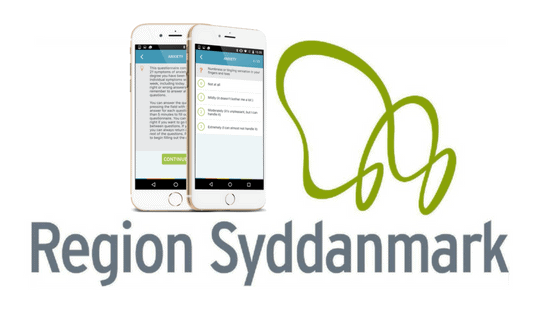
Region South Denmark Clinics will use the Monsenso mHealth solution to support treatment of individuals diagnosed with depression, anxiety, bipolar, schizophrenia, or borderline personality disorder.

Copenhagen, Denmark – 4, September, 2017

The Mental Health Services in the Region of Southern Denmark are currently rolling out the Monsenso mHealth solution to support the treatment of individuals with affective disorders.

Monsenso is an innovation leader in mobile health solutions for mental health. Their mHealth solution is presently used by 25 clinicians across Mental Health Services in the Region of Southern Denmark to support the treatment of individuals diagnosed with depression, anxiety, bipolar, schizophrenia or borderline personality disorder.

Thomas Lethenborg, CEO at Monsenso, said that the decision for the roll-out came as a natural progression of the collaboration between Monsenso and the Region of Southern Denmark Mental Health Services on the ENTER project and the Public-Private Innovation (PPI) Partnership.

“Monsenso and the Region South Denmark have been working on different research projects for quite some time now; it’s only natural they decide to roll out our mHealth solution widely. By implementing Monsenso Clinic, clinicians will have access to patients’ historical aggregated data which will assist them in making better decisions in regards to a person’s treatment,” Mr. Lethenborg added.

The Monsenso solution has been previously utilised during research trials at The Centre for Telepsychiatry in the Region of Southern Denmark.

Claus Faerch Head of Department at The Centre for Telepsychiatry in the Region of Southern Denmark said: “We are continuously looking to improve patient engagement, and this technology will help us to track and discover more changes in mood. Our aim is to use the technology to help support the treatment we currently provide to our patients, with views to expanding the programme to more clinicians shortly.”

The  mHealth solution is based on a double-loop treatment model. The first loop consists of a smartphone app operates as a self-management tool to provide the patient insight into how their actions may influence their disorder. Individuals can use the app to fill out routine self-assessments regarding their behaviour, such as logging the amount of hours they have slept.  Additionally, the app also collects sensor data and sends helpful notifications for when patients are reporting behaviour that may trigger symptoms of their disorder.

The second loop of the treatment model involves the clinician. Clinicians can access a web portal that is synchronised to the patient’s app. This synchronisation enables clinicians to efficiently access the data collected by the patients’ smartphones anytime and anywhere.

This comprehensive double loop feedback system aims to increase patient engagement, awareness, and informed decision making during treatment.

Click on this link to read this press release in Danish.

For additional information, please contact:
Helen Chen
Marketing
Monsenso
+45 30 25 15 26
marketing@monsenso.com

DBT smartphone app implemented by private clinic in Denmark

DBT smartphone app implemented by private clinic in Denmark

DBT smartphone app by Monsenso will be implemented by the end of August

Copenhagen, Denmark – 18 July 2017 Monsenso, a Danish developer in mobile health solutions for mental health, has announced that Datlinien, a private clinic in Denmark, will soon implement the Monsenso mHealth solution with an added Dialectical Behavioural Therapy (DBT) module.
DBT is an evidence-based treatment that is commonly used to treat Borderline Personality Disorder.

Online-based DBT solutions have been found to make treatment easier to manage for clinicians, by storing information in an easily accessible place through cloud technology.

A new DBT module was recently added to the Monsenso mHealth solution as part of the mDiary Study, a research project done in collaboration with several Danish partners. The Monsenso mHealth solution, which consists of a smartphone app for individuals and a web portal for clinicians, provides a reliable, efficient, and clinically-validated smartphone based approach to DBT.

Some of the key factors of DBT include skills training and self-monitoring, which have been administered traditionally through paper-based self-assessments, workbooks and diaries. The Monsenso DBT smartphone app helps optimise and organise this process, by putting self-assessments, self-monitoring, skills training, emotion rating, and synchronized clinician feedback into one convenient location – your smartphone.

Datlinien offers mental health services, with a special focus on DBT, to public and private institutions, and they provide DBT treatment for both group and individual therapy.

Thomas Lethenborg, CEO at Monsenso, said “This new DBT module was developed as part of the mDiary Study to complement the treatment of individuals undergoing DBT treatment. It was designed to modernise the traditionally used paper-based assessments and skills training, and to make it more intuitive.”

Dr. Shahram Elahi Panah, General Manager of Datlinien, said “By adopting this new technology, we want to raise the bar on the mental health services offered by private clinics in Denmark. The Monsenso DBT smartphone app makes data collection and skills training more fun and interactive, which is great for the patients because it increases compliance and engagement. On the other hand, it is also great for us, the clinicians, because we can visualise all the patient data more easily.”

Click on the link to read the press release in Danish.

For additional information contact:

Helen Chen
Marketing
Monsenso
+45 30 25 15 26
chen@monsenso.com

The IMPACHS project funded by Eurostars is ready to start

The IMPACHS project funded by Eurostars is ready to start

Copenhagen, Denmark – 28 June 2017.  The IMPACHS project funded by Eureka/Eurostars and the Innovation Fund in Demark, has the aim to design, develop and provide clinical evidence for the use of smartphone-based intervention technology for outpatients diagnosed with schizophrenia, to improve the availability and cost-effectiveness of mental healthcare.

The project, with a duration of 24 months (June 2017 – June 2019) and a total budget of 1.2 million Euros, brings together leading European research/academic institutions and SMEs.

The IMPACHS project (IMProving Availability and Cost-effectiveness of mental Healthcare for Schizophrenia through mHealth), is done in collaboration between Monsenso, the Psychiatric Research Unit from Region Zealand, time4you, and the University of Hamburg.

Cognitive Behavioural Therapy (CBT) is one of the most effective psychological approaches for psychotic symptom reduction, but only 10% of patients receive it due to growing shortage of professionals [1]. Mobile-based CBT interventions (mCBT), as an adjunct to traditional care, provide a unique opportunity to deliver continuous, cost-effective, accessible, non-stigmatizing and timely support to these patients[2], promoting the detection of alarming symptoms and reducing the duration of relapses, observed in 80% of patients[3].

The IMPACHS project aims to develop mobile- and context-aware CBT content, deployed through the time4you IBT® SERVER (eLearning) platform integrated into the Monsenso Clinic mHealth solution for mental illnesses that is HIPAA compliant and has a class 1 CE mark.

The staff at the University of Hamburg have extensive knowledge on using CBT for individuals with schizophrenia and has published several research papers in medical journals related to schizophrenia.  The project will leverage their substantial experience in clinical research within schizophrenia to develop the assessments and interventions planned.

The Psychiatric Research Unit of the Zealand Region of Denmark will begin the trial using an improved version of the Monsenso Clinic that offers psycho-education through the integrated IBT e-learning platform that delivers continuous, cost-effective, and timely support to individuals with schizophrenia, complementing their therapy.

Personalised triggers, defined jointly by individuals and therapists based on a person’s behaviours, can be used to detect symptom aggravation in real-time. Mobile CBT can help lower the severity of a person’s symptoms if the content is personalised and disorder-specific.

The objective of the clinical trial is to determine the feasibility of context-aware CBT and psycho-educative content in the users’ recovery process.

With regards to the clinical trial, Thomas Lethenborg, CEO at Monsenso, commented, “Mobile-based CBT and psychoeducation is a cost-efficient solution to complement a person’s treatment. In some cases, it might be the only type of therapy that some people might be able to access, depending on the waiting list for the mental health services, and their financial or geographical situation. This type of solution may be the best way to reach more people at a lower cost.”

Dr. Hartwig Holzapfel, Director of Professional Services, said “IMPACHS opens new ways for outpatient psychotherapy and patient education. With new individualized solutions that include learning analytics and adaptive learning, patients are empowered and gain faster access and better education. Mobile Health solutions are an economical and cost-efficient way of treatment and form an important building block of modern healthcare. Within the IMPACHS-project, time4you is responsible for the technical solution based on the IBT SERVER-software, system integration, and supports partners in developing content with methodical, didactical, medical and technical expertise.”

Click on the links to read the press release in Danish

[1] Bucci et al (2015) Using mobile technology to deliver a cognitive behaviour therapy-informed intervention in early psychosis (Actissist): study protocol for a randomised controlled trial. Trials 16:404

[2] Alvarez-Jimenez et al (2014) Online, social media and mobile technologies for psychosis treatment: A systematic review on novel user-led interventions. Schizophrenia Research 156 (2014) 96–106

[3] NICE Guidelines. Psychosis and schizophrenia in adults: treatment and management, [CG178]. London: Excellence NIfHaC; 2014.

For additional information contact:

Jennifer Highland
Marketing and Communications Manager
Monsenso
+45 30 25 15 26
highland@monsenso.com

Axel Wolpert
Senior Consultant
time4you
+49 172 208 43 58
wolpert@time4you.de