Developing our QMS is a continuous process. Recently, Monsenso has upgraded its QMS to the latest version of the standard EN ISO 13485 to the new revision: DS/EN ISO 13485:2016. Monsenso was audited by Bureau Veritas Certification Denmark A/S in June 2018 and found to be following the established procedures and the requirements of the standard DS/EN ISO 13485:2016.
So, what has Monsenso implemented in QMS to reflect the new standard and how does this affect users?
Quality management system with expanded risk management approach
According to the new version of the ISO standard, a risk based approach needs to be implemented in all the processes connected with the manufacturing of the medical device. This approach also include Monsenso’s suppliers.
In order to accommodate for this risk-based approach, Monsenso has implemented an extra layer of data security to our existing processes. This ensures that the evaluation / monitoring of our suppliers is proportionate to the risk associated with the purchased product. Monsenso’s critical suppliers are now placed on a risk level from I-IV, this ranking reflects the importance of the provided product relative to the medical device.
This implementation has helped to strengthen the control process of the suppliers, and helps to reduce risks that could potentially affect our customers and users of the product.
Closer to compliance with the requirements of the US market
Additionally, the new update of EN ISO 13845:2016 is in more alignment with US legislation and standards (FDA 21 CFR Part 820). Therefore, Monsenso is closer to meeting regulatory requirements of the FDA. FDA was a contributor to the new version and a lot of its regulation requirements are covered by this revision.
By upgrading their quality and security standards to become compliant with EN ISO 13845:2016, Monsenso has obtained an improved position to be aligned with worldwide requirements, including future compliance with FDA requirements on the US market.
Annual audit of ISO 27001 Information Security Management System
At the same time, Monsenso went through annual audition of ISO 27001. Compliance with this certification validates that Monsenso’s comprehensive information security practices protect its users and their information in accordance with internationally recognised standards.
The ISO 27001 standard ensures the secure management of customers’ information, intellectual property, and third party information by establishing methodologies and meeting key objectives for implementing information security.
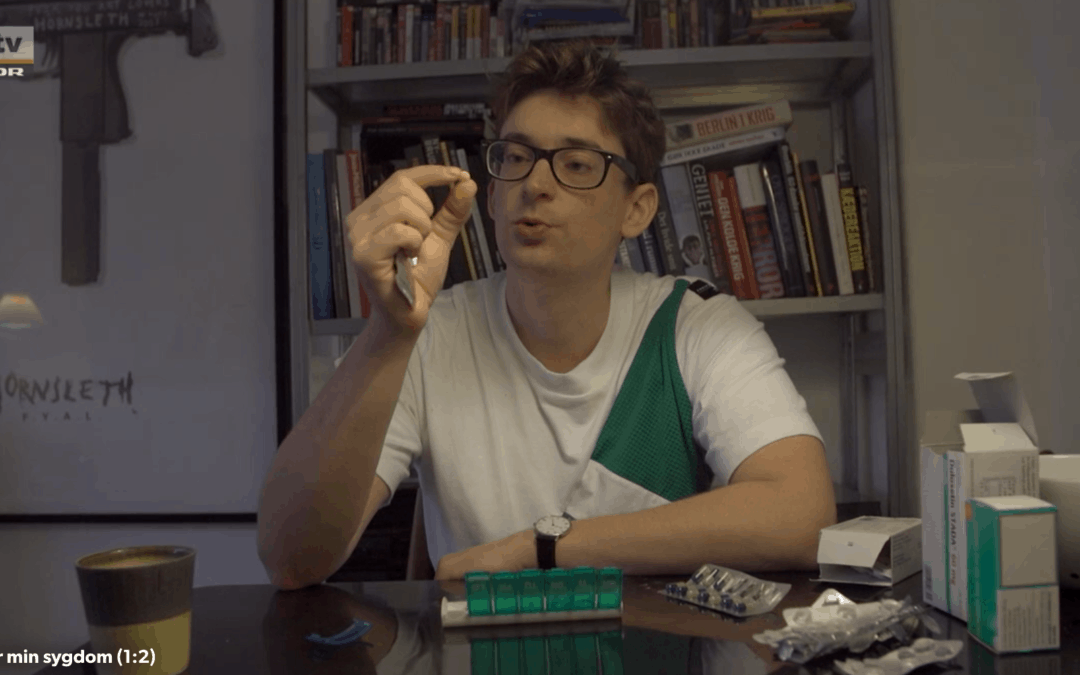
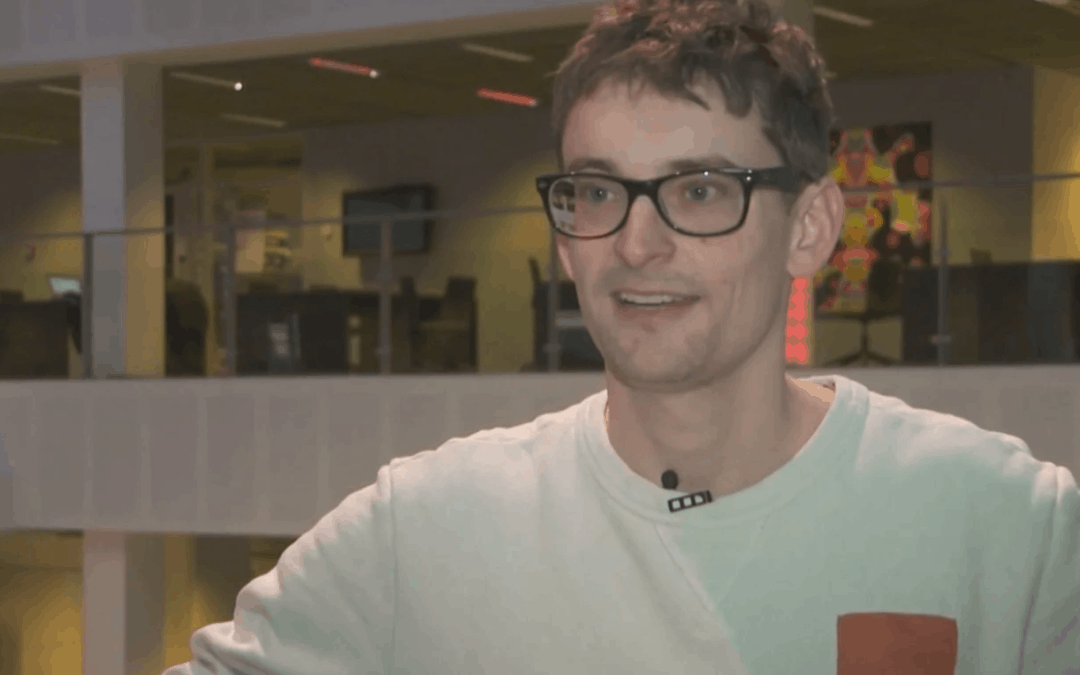
Peter Hagelund’s has a documentary series in Danish called “Jeg savner min sygdom” which translates to “I miss my illness” the series is about living with Bipolar Disorder Type 2. Click on this link to watch the documentary.
In 2014, I was diagnosed with Bipolar Disorder Type 2.
During my whole life, I had known that something was different about me. I always struggled with depression and anxiety, and what eventually turned out to be hypomania. When I was 22, I had my first big depression episode and had to start taking antidepressants. However, it would take me six more years before I was officially diagnosed with Bipolar Disorder Type 2.
The tricky thing about having this diagnosis is that you do not experience the typical manic episode where you are over-energetic and nearly psychotic. Instead, you’re hypomanic, which means that you’re socially well functioning. You’re not psychotic. You actually feel really good. So the problem is, that you don’t go to your psychiatrist and say that you feel too well. At least I didn’t.
The reason why my psychiatrist found out I had Bipolar Disorder was because I couldn’t get out of my depression. At first, my psychiatrist diagnosed me with depression and ADD. But these diagnoses didn’t seem to fit because I still had strong mood swings and a lot of anxiety. When I was diagnosed with Bipolar Disorder Type 2, it actually made sense. Suddenly, I could see why I had felt the way I had most of my life.
I really believe that the Monsenso smartphone app could have helped my psychiatrist give me the right diagnosis at an earlier stage because the app helps me to keep track of my mood and to become more aware of how I feel. With the app, I have to pause and take a moment to think about how I’ve actually been doing before entering my answers. Keeping track of all this information has helped my treatment. My psychiatrist and I can plan better on how to avoid my future depressive or hypomanic episodes because we can clearly identify when I am having mood swings.
In August 2018, my documentary about living with Bipolar Disorder aired on national Danish television and the response was overwhelming. Many people have contacted me, to thank me for talking about my illness. I had made the documentary so other people who have this illness, are not ashamed of it and I think I succeeded.
My hope is that in the future people are diagnosed at an earlier stage than I was and I truly believe the Monsenso app is one of the things that can help. I really hope that other psychiatrists and their patients will start using the app.
Monsenso user, Mads Trier-Blom, speaks of his experience using the Monsenso app as a part of a clinical trial. The Monsenso app has helped Mads to become more connected with his clinician, Bente so that she could help intervene with Mads’s moods even before it turned into an episode.
The app helped him to become more aware of his mood, and other factors, such as sleep, and their influence on his bipolar affective disorder. To Mads, having bipolar disorder means constantly keep a balance, to prevent losing control to either depressive or manic episodes.
“In my life with bipolar disorder, I see myself as a tightrope walker. This metaphor for living with bipolar disorder is very meaningful. I feel like a tightrope walker because when living with bipolar disorder, you constantly have to prevent losing control to either depressive episodes or manic episodes. You are able to avoid this through earlier registration on how your mood is fluctuating so that the app can help you to keep in control of your life.” says Mads Trier-Blom.
During Mads’s time in his clinical trial, he felt more connected to his clinician, Bente. He recalls an instance where he had missed completing his self-assessments for a couple of days, and Bente had called him to check and see how he was doing. With Bente calling to check in on him, it helped Mads to become more aware of how his mood.
“One day, I was driving in my car and I was a little tense. Suddenly, the phone rang. It was this lady, saying, ‘Hi, my name is Bente and I just wanted to hear about how you are doing. At first, I was like,’Who are you, why are you calling me?’ and then she said, ‘Well, you’re on this trial and I can see that you haven’t made registrations for 3 days. So I thought, ‘Oh yeah, this is true. I am kind of tense at the moment, but yeah I think it’s okay; but still this answering back to the clinician and the clinician is able to call you back which makes you aware and alert.” says Mads Trier-Blom.
To turn on English subtitles, click on the ‘CC’ at the bottom of the video.
Psychiatrist Kristoffer Södersten from PsykiatriResurs in Sweden shares his experience using the Monsenso mHealth solution.
How does the Monsenso mHealth solution encourage and empower better mental health treatment?
Kristoffer explains how the Monsenso mHealth solution helps him to enhance and inform treatment. Specifically, the solution helps him to gain more relevant information about his patients, such as information that couldn’t have been obtained through the traditional method of verbal sessions. “It’s difficult to retrieve reliable and consistent data from each patient during a verbal consultation with them,” says Kristoffer.
Obtaining the right information is key for psychiatrists and psychologists to provide an accurate diagnosis
“[The accuracy from a diagnosis obtained] from face-to-face consultation depends so much on factors like personal relations, how comfortable the patient is in the conversation, cultural background, etc. Therefore, [due to these factors] it can be very arbitrary about which diagnosis a patient receives. This diagnosis can depend on which clinician he meets, and these other factors.” says Kristoffer. The information gathered from the Monsenso Clinic can help to provide a consistent and clearer view of the patient’s mental health, to better inform a diagnosis.
Kristoffer finds the Monsenso mHealth solution to be particularly helpful in capturing relevant objective data. The solution provides a comprehensive and easily accessible overview of relevant patient data, such as day score, mood score, sleep and medication adherence. Moreover, overview of collected sensor data, such as physical activity, social activity, phone usage and voice features can also be provided. This objective data can help to supplement the subjective data provided during verbal therapy.
“The technology of Monsenso can help us to gather more objective data that – together with the subjective experience – provide a more holistic picture of the patient’s problems, to help provide a more accurate diagnosis and follow-up treatment in a totally different way,” says Kristoffer.
Monsenso mHealth solution is providing a visualization of a historical data, which in some cases can identify why the symptoms appear and help to prevent them.
“You can also use this tool to predict future psychological outcomes, which can help us intervene early and prevent relapse.”
In this video, Monsenso User Peter Hagelund speaks about his experience using our mobile health solution to support his bipolar disorder treatment, and how the solution has helped improve and inform his communication with his psychiatrist.
Prior to using the app, Peter & his psychiatrist followed the typical therapeutic setting, they would meet for an appointment every two-three weeks, and they would have a conversation regarding Peter’s past weeks. Peter would usually say that he had been fine for each appointment, but he would sometimes forget important details regarding his previous weeks that he wanted to discuss.
“It can be pretty tricky to remember, two weeks later [between appointments] how you actually felt that day. With the app it’s really easy to go back and see if your mood has been pretty stable over the last two months, or if you had had some ups and downs over a period,” says Peter Hagelund.
With the app, instead of relying solely on their conversation and Peter’s memory during the appointment, Peter’s psychiatrist can now access his logged data and see how he has been doing, as it is happening. His psychiatrist can view how much he has been sleeping, how much he exercises, how much he drinks, how much anxiety he has, and other relevant aspects to his treatment and his disorder.
“By having the [Monsenso] app, my psychiatrist can actually go into it and see how I’ve been doing, as in, yeah, you say you’ve been doing fine, but I can actually see that you’ve had a bit of ups and a bit of downs, and I think [the app] helps your psychiatrist to get a really honest view of how we, as patients, have been.” says Peter Hagelund.
Monsenso uses cookies for the purpose of statistical analysis, improving the usability and friendliness of our website, and tailoring content to your interests. By visiting this website, you consent to our and third-party use of cookies as described in our privacy and cookie policy. Read more