

World Mental Health Day 2022

World Mental Health Day 2022

October 10th is World Mental Health Day, aiming at shining light on the prevalence of mental ill health globally and the need to “strengthen mental health care so that the full spectrum of mental health needs is met” [1].

How common are mental illnesses?
970 million individuals worldwide, or 1 in every 8 people, had a mental illness in 2019 [2]. Due to the COVID-19 pandemic, these numbers have been even more on the rise during the past two years [1]. Anxiety and depression disorders, for example, are estimated to have increased by more than 25% among the global population during the first year of the pandemic [1].

Economic costs of mental disorders
Statistics show that in 2010, mental diseases cost the global economy US$2.5 trillion in direct and indirect costs, and mental and drug use disorders made up 10.4% of the total global illness burden [3]. By 2030, it is anticipated that the direct and indirect costs of mental illnesses will have doubled – without taking into account expenses related to mental problems that originate outside of the healthcare system, such as legal expenses brought on by the consumption of illegal drugs [3].

Stigmatization of ill mental health
More than half of those suffering from mental illness do not obtain treatment. People often put off or postpone getting therapy out of fear of being treated “differently or […] losing their jobs and livelihood” [4]. This is due to the fact that stigma, discrimination, and prejudice toward those who have mental illnesses are still major issues in today’s global society.
Often, experiencing external stigmatization can lead to greater self-stigma for individuals, which was linked to worse recovery from mental illness in scientific studies [4].

The growing treatment gap
The COVID-19 pandemic has sparked a global mental health crisis, causing millions of people to experience short- and long-term stress and jeopardizing their mental health. During COVID-19, the gap in treatment for mental health disorders has expanded significantly, while mental health services have been severely disrupted at the same time [1]. Resources in mental health services are thus limited and often not sufficient to meet the treatment needs for poor mental health [5].

What needs to change?
Mental disorders are more common than one might think, and prejudices surrounding poor mental health unfortunately only further increase the burden of the diseases on people suffering from them. It is therefore important to raise awareness about mental health problems, destigmatize mental illness, and help to ensure that individuals struggling with their mental health are not facing discrimination.
Given the high economic costs of mental disorders, it is also important to continuously work on improving the treatment support provided. Especially with lacking resources in mental health services and a growing treatment gap, this includes seeking new ways to help individuals suffering from mental health conditions.

How digital solutions for mental health can help
The use of digital platforms for remote patient monitoring and health assessment, as well as real-time patient analytics, could enable personalised treatment and improved quality of care [6]. Digital solutions for mental health could therefore offer the potential to empower and engage individuals with mental disorders to better manage their mental health, facilitating treatment for clinical professionals and empowering family caregivers to help drive down economic costs and increase productivity.
At Monsenso, we have worked with a variety of mental health disorders in both research and clinical settings. Our digital mental health solution has helped many individuals struggling with their mental health to better understand their conditions and live a more independent life, as well as helped clinicians to better support their patients. We are proud to support the World Mental Health Day and will continue to spread knowledge about mental health conditions and offer our support to individuals affected and clinicians providing treatment for mental illness.

——————————————————————————————————————————-

About Monsenso
Monsenso is an innovative technology company offering a digital health solution used for decentralised trials, remote patient monitoring and treatment support. Our mission is to contribute to improved health for more people at lower costs by supporting treatment digitally and leveraging patient-reported outcomes data. Our solution helps optimise the treatment and gives a detailed overview of an individual’s health through the collection of outcome, adherence, and behavioural data. It connects individuals, carers, and health care providers to enable personalised treatment, remote care, and early intervention. We collaborate with health and social care, pharmaceuticals, and leading researcher worldwide in our endeavours to deliver solutions that fit into the life of patients and health care professionals. To learn more visit  www.monsenso.com.

References:
[1] World Health Organization (n.d.). World Mental Health Day 2022.
https://www.who.int/campaigns/world-mental-health-day/2022

[2] World Health Organization (2022). Mental disorders.
https://www.who.int/news-room/fact-sheets/detail/mental-disorders

[3] Trautmann, S., Rehm, J. & Wittchen, H. (2016).  The economic costs of mental disorders. EMBO reports 17(9).
https://www.ncbi.nlm.nih.gov/pmc/articles/PMC5007565/

[4] American Psychiatric Association (n.d.). Stigma, Prejudice and Discrimination Against People with Mental Illness.
https://www.psychiatry.org/patients-families/stigma-and-discrimination#:~:text=Public%20stigma%20involves%20the%20negative,have%20about%20their%20own%20condition.

[5] Saraceno, B. (2004). Mental health: scarce resources need new paradigms. World Psychiatry 3(1): 3–5.
https://www.ncbi.nlm.nih.gov/pmc/articles/PMC1414651/

[6] Elsevier Health (2022). Clinician of the Future Report 2022.
https://www.elsevier.com/connect/clinician-of-the-future

Patients will help document treatment efficacy in innovative, decentralised trials project

Patients will help document treatment efficacy in innovative, decentralised trials project

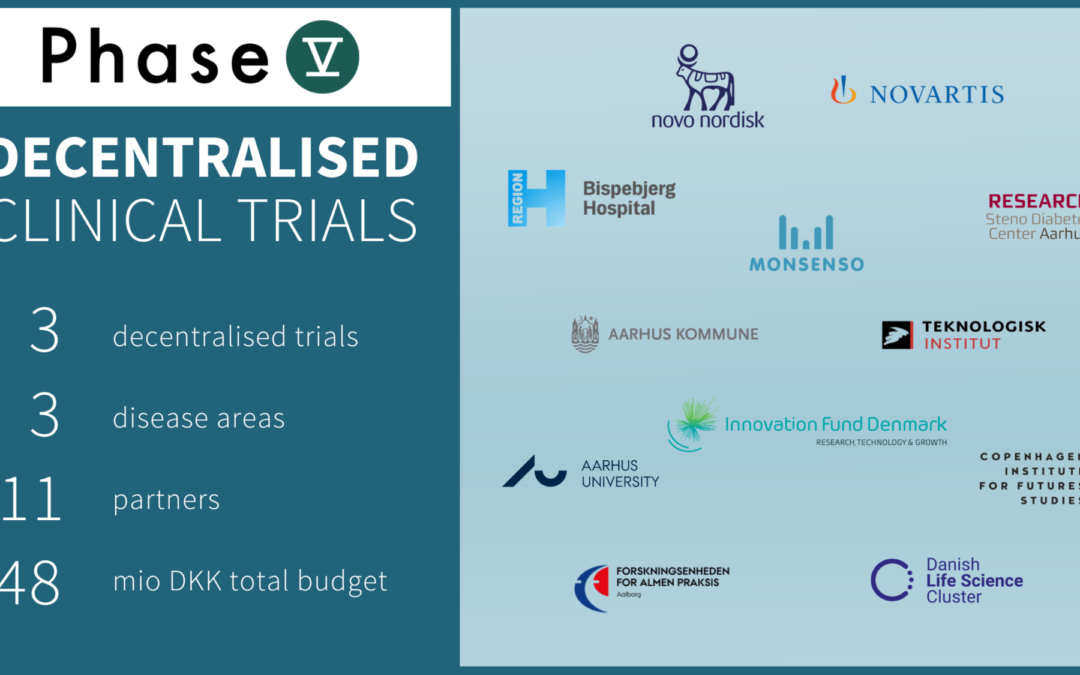
In collaboration with leading researchers and the pharmaceutical industry, the PhaseV innovation project will set new standards for how the effects of treatment can be documented so that patients are offered the right treatment. Patients and healthcare professionals will thus provide data that can help shed light on whether the treatment is working when Monsenso’s digital platform is used to support decentralised trials in the project.

To date, medical treatments have been tested primarily in long-term, randomised clinical trials to determine treatment effects and side-effects, with limited measurement of long-term effects when treatment is provided in clinical practice.

Often, drug trials take 6-15 years before a new drug can be released on the market, and 80 percent of trials fail to recruit and retain a sufficient number of patients in the trials within the set timeframe. This means that the benefits for patients and healthcare systems are often delayed. However, with digital developments, it is possible for clinics, hospitals, and patients alike to play a more active role in documenting the impact of treatments.

The new PhaseV (Phase five) innovation project, in which Innovation Fund Denmark is investing DKK 24 million (of which DKK 8,3 million goes to Monsenso), aims to develop and validate a scalable digital platform for efficient, decentralised patient recruitment, patient data collection and study execution. This is done by engaging patients and clinicians in the monitoring of treatment effects over longer periods of time based on patients’ own feedback, digital biomarkers from smartphones and wearables, as well as registry data.

“With this project, we want to show that it is possible to engage and motivate patients and healthcare professionals to collect continuous data from patients over time. PhaseV will set new standards for how the efficacy and safety of new treatments can be documented in a scalable way in the future, so that patients are offered the right treatment“, says Thomas Lethenborg, CEO of Monsenso.

“Digitizing the effect of patient treatments can be of decisive importance for our insight into the effects of the treatment of severely overweight people as well as for future clinical studies, where the goal is to make it easier for both patients and healthcare personnel to participate“, says Daniel Vega Møller, Vice President Medical & Science Obesity, NASH and Devices Novo Nordisk A/S.

Country Manager for Novartis in Denmark, Peter Drøidal, also sees great potential in the PhaseV project: “The healthcare system lacks resources and therefore we all need to think in new ways. This project’s combination of public and private partners offers unique opportunities to develop new digital solutions that can help improve patient care and free up personnel time“.

Severe obesity, urticaria and diabetic foot ulcers
The PhaseV project will develop a platform with three apps to collect data on patients with severe obesity, diabetic foot ulcers and urticaria – all of which are costly chronic conditions. For example, annual treatment costs for severe obesity alone are estimated to exceed DKK 15 billion for Danish municipalities and regions.

“More than 800,000 Danes live with severe obesity, and associated diseases are very common. As severe obesity causes both direct and indirect costs to society, there is a significant need for good and well-documented weight loss treatments“, says Jens Meldgaard Bruun, clinical professor at Aarhus University and Steno Diabetes Center Aarhus and part of PhaseV.

Urticaria affects 15-20 percent of the population, and in about 1 percent it occurs chronically and causes a severely reduced quality of life.

“Thorough monitoring and efficient data collection on symptom development are crucial for correct and effective future treatment“, says Simon Francis Thomsen, Professor and Chief Physician at Bispebjerg Hospital.

22.000 Danes live with diabetic foot ulcers and treatment costs society more than DKK 5 billion annually.

“For a patient with diabetes, a foot ulcer can become critical within days, and in exceptional cases amputation may be necessary. Hence, time is of the essence, and we want to prevent serious complications“, says Klaus Kirketerp-Møller, senior physician at Bispebjerg Hospital and Steno Diabetes Center Copenhagen.

The PhaseV project is expected to bring value to patients, regions, and municipalities, as well as to the institutions and companies involved.

Attractive new market opportunity for Monsenso
“We are further developing Monsenso’s digital health platform to improve the support of decentralised trials across chronic conditions, where behaviour and ongoing follow-up play a major role in patients’ quality of life. We see both the development work and the partnerships as very interesting for Monsenso, because it opens up a new, attractive market opportunity“, says the CEO of Monsenso, Thomas Lethenborg.

The consortium behind the project, which is supported by the Innovation Fund, includes Novo Nordisk, Novartis, Aarhus University, the Research Unit for General Practice, Aarhus Municipality, Bispebjerg Hospital, the Danish Technological Institute, the Danish Life Science Cluster, Steno Diabetes Center Aarhus, the Copenhagen Institute for Future Studies and Monsenso.

Financial expectations
The project does not change Monsenso’s financial expectations for H2 2022 but is expected to contribute to increased growth in 2023 and beyond.

Facts
Innovation Fund investment: DKK 24.3 million (of which DKK 8.3 million is for Monsenso).
Total project budget: DKK 48.2 million.
Duration: 3 years
Official title: PhaseV

Further information
CEO, Monsenso
Thomas Lethenborg
Tel. +45 21 29 88 27
E-mail: lethenborg@monsenso.com

Chairman of the board, Monsenso
Peter Mørch Eriksen
Tel. +45 29 00 35
E-mail: petermorcheriksen@outlook.com

Certified Adviser, Monsenso
Norden CEF A/S
John Norden
Tel. +45 20 72 02 00
E-mail: jn@nordencef.dk
——————————————————————————————————————————-

About Monsenso
Monsenso is an innovative technology company offering a digital health solution used for decentralised trials, remote patient monitoring and treatment support. Our mission is to contribute to improved health for more people at lower costs by supporting treatment digitally and leveraging patient-reported outcomes data. Our solution helps optimise the treatment and gives a detailed overview of an individual’s health through the collection of outcome, adherence and behavioural data. It connects individuals, carers and health care providers to enable personalised treatment, remote care and early intervention. We collaborate with health and social care, pharmaceuticals and leading researcher worldwide in our endeavours to deliver solutions that fit into the life of patients and health care professionals. To learn more visit  www.monsenso.com

 
Monsenso has signed an agreement with Awakn Life Sciences, a global biotech company

Monsenso has signed an agreement with Awakn Life Sciences, a global biotech company

Monsenso has signed an agreement with, a global biotech company, to support the company’s medical psychedelic treatments. Awakn Life Sciences is a global biotech company that leads the field of psychedelic medicine for the treatment of addiction. In October 2021 commenced the implementation of the Monsenso Digital Health Solution in Awakn Life Sciences clinical practice as a tool for supporting patients throughout their treatment while capturing real-world patient insights to inform clinical decision-making and personalised treatment.

Mental illness and addiction are some of the biggest public health challenges facing the global community.

Nearly one billion people worldwide suffer from mental illness, for which there are too few effective treatments available beyond coping strategies and treating symptoms. With global spending on mental health estimated to reach $16 trillion by 2030 (as measured by lost economic output)[1], it is critical that effective new treatments are developed to address the current gaps. Psychedelic-assisted therapy has emerged as a potential solution to this treatment vacuum. In the early 20th century, these substances were severely restricted and had a negative connotation. Today, however, a growing body of evidence and urgent unmet patient needs have led clinicians and regulators to consider them as a viable treatment option.

Psychedelic-Assisted Psychotherapy represents a paradigm shift in psychiatric treatment

Psychedelic drugs are substances that alter perception and mood and affect various cognitive processes. When used in conjunction with psychotherapy, they can put patients in a temporary state where they can better process memories, emotions, and past traumas[2], allowing for processing that enables subjects to let go of things that have previously troubled them[3]. For the same reason, psychedelic-assisted psychotherapy has shown effective in treating historically difficult-to-treat illnesses[4] and is today considered a promising game-changer in psychiatric treatment[5,6,7].

While psychedelics have spurred great interest in the life science industry, only a few psychedelic companies are currently treating patients in the clinical setting. Awakn Life Sciences launched the UK’s first psychedelic-assisted clinic in Bristol, followed by London and Manchester, offering evidence-based psychedelic therapies for addiction and other mental health indications, and has also opened a clinic in Oslo, Norway with plans to scale across Europe quickly.

In October 2021, Awakn Life Science commenced implementation of the Monsenso Digital Health Solution in its clinical practice to support patients throughout their treatment journey and to capture real-world data to inform clinicians’ decision making for personalised patient support and management.

“We are excited to work with Awakn Life Science to support new treatment options for people who have experienced insufficient treatment results. We look forward to partnering with Awakn Life Sciences and be part of their growth journey” says CEO of Monsenso, Thomas Lethenborg.

Awakn’s CEO, Anthony Tennyson added “There’s such a critical need to provide solutions and hope to people suffering from mental illnesses and addiction. We’re excited to partner with Monsenso to better engage with clients throughout their treatment, gain insights to help inform clinical decisions and improve health outcomes, and generate insights that inform our research and treatment development programs”.

About Awakn Life Sciences 
Awakn Life Sciences is a publicly-traded (NEO: AWKN) (OTCQB: AWKNF) biotechnology company with clinical operations; researching, developing, and delivering psychedelic medicine to better treat Addiction. Awakn’s team consists of worldleading chemists, scientists, psychiatrists, and psychologists who are developing and advancing the next generation of psychedelic drugs, therapies and enabling technologies to treat Addiction.

About Monsenso
Monsenso is an innovative technology company offering a digital health solution used for decentralised trials, remote patient monitoring and treatment support. Our mission is to contribute to improved health for more people at lower costs by supporting treatment digitally and leveraging patient-reported outcomes data. Our solution helps optimise the treatment and gives a detailed overview of an individual’s health through the collection of outcome, adherence, and behavioural data. It connects individuals, carers, and health care providers to enable personalised treatment, remote care, and early intervention. We collaborate with health and social care, pharmaceuticals, and leading researcher worldwide in our endeavours to deliver solutions that fit into the life of patients and health care professionals. To learn more visit  www.monsenso.com.

For additional information contact:
Bettina van Wylich-Muxoll
Chief Marketing Officer
marketing@monsenso.com
Monsenso

Sources:

[1] https://www.weforum.org/agenda/2020/10/mental-health-day-covid19-coronavirus-global/

[2] https://www.health.harvard.edu/blog/back-to-the-future-psychedelic-drugs-in-psychiatry-202106222508

[3] Jennifer Mitchell, neuroscientist and professor in the departments of neurology, psychiatry and behavioral sciences at the University of California San Francisco.

[4] Psychedelic-Assisted Psychotherapy: A Paradigm Shift in Psychiatric Research and Development

[5] https://www.health.harvard.edu/blog/back-to-the-future-psychedelic-drugs-in-psychiatry-202106222508

[6] https://www.scientificamerican.com/article/a-renaissance-for-psychedelics-could-fill-a-long-standing-treatment-gap-forpsychiatric-disorders/

[7] Psychedelic-Assisted Psychotherapy: A Paradigm Shift in Psychiatric Research and Development

Mental health in an unequal world. World Mental Health Day 2021

Mental health in an unequal world. World Mental Health Day 2021

Mental illness, why bother if all goes well? Because the day it hits you or your loved ones, you may be faced with the harsh reality of “Mental Health in an unequal world”. Close to 1 billion people globally are living with a mental disorder. Yet, countries spend on avg. 2% of their national health budgets on mental health leaving a disproportionate gap between demand for mental health services and supply. Each year, October 10th marks the “World Mental Health Day”. This year the theme is “Mental Health in an Unequal World”. 

Originally chosen by the World Federation for Mental Health, the theme Mental Health in an Unequal World” refers to the inequality in access to health services in low- and middle-income countries, where between 75% and 95% of patients with mental disorders have no access to mental health services at all. Despite the universal nature and the magnitude of mental illness, the gap between demand for mental health services and supply remains substantial.

The global pandemic along with the climate crisis and social disarrangement lead the world to a difficult place. To date, the pandemic is impacting people of all ages and backgrounds: Illness, economic impact, job insecurity, and most importantly, physical distancing leading to social isolation and millions of people facing mental health issues.

  • Close to one billion people have a mental disorder and anyone can be affected.
  • Depression is a leading cause of disability worldwide and a major contributor to the global burden of disease. Globally, an estimated 5% of adults suffer from depression.
  • Globally, one in seven 10-19-year-olds suffers from a mental disorder. Half of all such disorders begin by the age of 14, but most go undiagnosed and untreated.
  • People with severe mental disorders like schizophrenia typically die 10-20 years earlier than the general population.
  • One in 100 deaths is by suicide. It is the fourth leading cause of death among young people aged 15-29.
  • The COVID -19 pandemic has had a significant impact on people’s mental health.

The World Federation for Mental Health also addresses the disparity between mental health investment and overall health. On average, countries spend only 2% of their national health budgets on mental health. This has changed little in recent years. Despite the scale of mental illness, the gap between demand for mental health services and supply remains substantial. Unaddressed mental health issues are now a leading global cause of disability and suffering. Yet only 10% receive “adequate” treatment – 75% receive no treatment at all.

The limited global availability of effective mental health treatments and a lack of objective measures of response to treatment, are some of the barriers in advancing patient outcomes. To reduce burden, it is critical to diagnose and monitor mood disorders using widely accessible, less costly, and scalable methods, which can enable a higher degree of specificity in mental health diagnoses and timely detection of clinical deterioration.

Building on the widespread adoption of smartphones, mobile health (mhealth) has gained significant interest as a means for capturing continuous, objectively observable and measurable data of patients’ behaviour and mental state. The data collected on smartphones and sensors represent a new approach aimed at measuring human behaviour and mental health, and thus an opportunity of detecting, assessing, and monitoring psychiatric disorders in a less costly and less burdensome way for the clinician.

The data collected on the smartphone are also referred to as digital biomarkers. These can be collected both passively through inbuilt sensors on the smartphone (physical activity and geolocation, social activity, text messages usage, phone usage, voice and speech pattern or wearables (sleep and activity), and actively via user engagement through self-monitored data/self-assessment data (mood, sleep, stress, medicine adherence).

By collecting this data between physician visits, clinicians can see fluctuations in patients’ mental states, providing a more holistic representation of the patient’s functioning over time. The data hereby offer the opportunity for clinicians to predict relevant outcomes in mood disorders and can thus serve as a tool of triage enabling to provide timely and preventative support to the individuals in critical need.

This approach, also known as digital-enabled psychiatry, has gained considerable interest and been extensively researched over the past decade to offer more people access to high-quality health and social care.

To learn more, visit our Research section here or watch a video on the opportunity of digital-enabled psychiatry from the Week of Health and Innovation conference 2021 in Denmark.

References:

https://wfmh.global/2021-world-mental-health-global-awareness-campaign-world-mental-health-day-theme/

https://www.who.int/publications/i/item/9789240031029

https://www.who.int/campaigns/world-mental-health-day/2021

https://www.who.int/key-messages

[1] https://www.who.int/gho/publications/world_health_statistics/EN_WHS2012_Full.pdf

[2] The size and burden of mental disorders and other disorders of the brain in Europe 2010. Eur Neuropsychopharmacol. 2011

[3] OECD – 2015

[4] Economist Intelligence Unit – 2015

Monsenso moves into a new disorder area with a new project covering Multiple Sclerosis

Monsenso moves into a new disorder area with a new project covering Multiple Sclerosis

Monsenso, leading provider of digital solutions for mental health, moves into a new disorder area with a project covering Multiple Sclerosis (MS). The project is part of the HedaX research project and is conducted jointly with the Danish Multiple Sclerosis Society. 

The aim of the project, led by Lasse Skovgaard from the Danish Multiple Sclerosis Society, is to explore whether data-driven insight from daily self-assessments can empower users to better manage their disease.

In Denmark, approximately 17.200 people have Multiple Sclerosis (MS), and worldwide there are 2.1 million people diagnosed with MS. MS is an autoimmune disease in which the body’s immune system (autoantibodies) begins to attack and destroy the body’s own nerve cells. MS is a progressive disorder that can affect different places in the central nervous system, why symptoms and disabilities are manifold. Due to the broad heterogeneity among the MS patients’ disease courses, it is difficult to personalise a treatment course for better outcomes.

The aim of the study, therefore, is to validate whether data-driven insight from daily self-assessments can empower users and serve as a tool for individual disease management.

Study participants will be provided with the Monsenso app to assess daily self-assessments of symptoms, lifestyle measures and quality of life. Through visualisation of the historical data, the users can gain better insight into the behaviours that trigger their symptoms, thereby empowering them to better manage their disease.

The project is part of the HedaX research project, funded by the Innovation Fund Denmark, which involves ten public and private partners working together to develop a digital platform to ensure health data is securely captured and shared between individuals, healthcare professionals and researchers. The HedaX-project initially covered cancer and bipolar patients but will now be extended to cover MS patients.

‘’The project with Monsenso offers an opportunity to work closely with a patient organisation and determine whether patients can manage their disease better through the use of a state-of-the-art patient-centred app. The Danish Multiple Sclerosis Society was chosen as a partner because they have a clear ambitious digital strategy’’ says Troels Bierman Mortensen, CEO of DataFair and Project Manager for the HedaX project.

“Multiple Sclerosis is a serious and disabling disease. We are therefore pleased if the Monsenso solution can help to improve future treatments,” says Thomas Lethenborg, CEO of Monsenso.

About the Danish Multiple Sclerosis Society
The Danish Multiple Sclerosis Society is a nationwide organisation with 48 local branches throughout the country and the Faroe Islands and over 60 years of experience in making a difference by leading the way in research, patient support and providing information on Multiple Sclerosis. The organisation counts more than 60,000 members and donors – including 12,000 members with MS which corresponds to 80 percent of all Danish patients with MS.

About Monsenso
Monsenso is an innovative technology company offering a digital health solution used for decentralised trials, remote patient monitoring and treatment support. Our mission is to contribute to improved health for more people at lower costs by supporting treatment digitally and leveraging patient-reported outcomes data. Our solution helps optimise the treatment and gives a detailed overview of an individual’s health through the collection of outcome, adherence, and behavioural data. It connects individuals, carers, and health care providers to enable personalised treatment, remote care, and early intervention. We collaborate with health and social care, pharmaceuticals, and leading researcher worldwide in our endeavours to deliver solutions that fit into the life of patients and health care professionals. To learn more visit  www.monsenso.com.

To read the Danish version, click here

For additional information contact:

Bettina van Wylich-Muxoll
Chief Marketing Officer
marketing@monsenso.com
Monsenso