
Feb 9, 2016
Borderline personality disorder (BPD) is a severe mental illness that causes unstable moods, behaviour, and relationships. It usually begins during adolescence or early adulthood [1].
Most psychiatric disorders cause a permanent abnormal social behaviour, whereas borderline personality disorder only causes brief psychotic episodes. As a result, experts believe this is an atypical mental illness that can be misleading [2].
According to a 2015 study undertaken by French psychiatrist Lionel Cailhol, BPD is equally common in both genders. Nonetheless, in clinical populations, females represent 75% of all patients. Some experts believe this is due to men having difficulty seeking help, especially in psychotherapy [3].
BPD usually appears during late adolescence. However, clinicians recommend that a diagnosis should not be made before the age of 18 years. Patients should be treated later on when the symptoms are clear and persistent.
The most common causes of BPD are believed to be early maternal separation and childhood trauma [3]. However, identifying symptoms at an early stage or educating a child in a manner that could prevent BPD would spare the patient a lot of pain, time and money. As life-coach Tami Green explains in one of her talks, a good way of avoiding BPD is to accept people and their flaws without trying to change them. She gives an example of a very sensitive child that is pressured by their parents to become tougher and bearable, however the pressure violates this child to the core of who they are. It can be very difficult to handle this sort of conversation without criticizing them. [4]
It is particularly hard for families of adolescents, because they need to help their children cope with their behaviour, provide them with help, and teach them to manage their risk-taking behaviour. Besides the many challenges that young people face, adolescents suffering from BPD can be very vulnerable and difficult to handle [3].
BPD symptoms evolve over time, however, here is a list of a few common symptoms that teenagers face:
- Para-psychotic manifestations
- Risky sexual behaviour
- Regression linked to treatment
- Counter-transference problems, “special” treatment relations
- Abuse, dependence on psychoactive substances
- Self-harm
- Repeated suicide attempts
- Demandingness
- Severe identity disorder [3]
One of the best therapies that helps patients to cope with BPD is Dialectical Behavioural Therapy (DBT). This method consists of a cognitive-behavioural approach that emphasises the psycho-social aspects of treatment. DBT is conceived for people that are prone to react in a more intense and out-of-the-ordinary manner toward certain emotional situations, primarily those found in romantic, family and friend relationships [5].
The Monsenso mHealth solution can help clinicians monitor and treat young patients suffering from BPD. In fact, the Mental Health Services in the Region of Southern Denmark (MHS) will soon begin clinical trials of a mobile coach app that supports DBT of BPD patients. To learn more about this project, click here!
References:
[1] About Borderline Personality Disorder (BPD). National Education Alliance Borderline Personality Disorder
http://www.borderlinepersonalitydisorder.com/what-is-bpd/bpd-overview/
[2] Borderline Personality Disorder. National Institute of Mental Health.
http://www.nimh.nih.gov/health/topics/borderline-personality-disorder/index.shtml
[3] Borderline Personality Disorder in Adolescentes. L. Cailhol, L. Gicquel and J.P. Raynaud (2015)
http://iacapap.org/wp-content/uploads/H.4-BORDERLINE-2015-UPDATE.pdf
[4] How BPD Forms in a Child. Video. T. Green (2009)
https://www.youtube.com/watch?v=Ct1ZmMCRP18
[5] An Overview of Dialectical Behavior Therapy. Psych Central Staff
http://psychcentral.com/lib/an-overview-of-dialectical-behavior-therapy/
[6] Borderline Personality Disorders: Signs, Symptoms and Treatment
https://www.choosingtherapy.com/borderline-personality-disorder/

Feb 5, 2016
In 2015, the increasing demand for mental health services by university students raised a huge concern amongst teachers, parents and society in general.
In fact, the Centre for Collegiate Mental Health (CCMH) released a report that included the participation of 139 college and university counselling centres, and more than 100,000 students seeking mental health care during the academic year 2014/2015.
It is necessary to mention that according to clinicians, anxiety has surpassed depression as the leading mental health issue being faced by college students.
However, students have become more self-aware and have started seeking help at counselling centres. In fact, students have taken over more than 50% of the centres’ total capacity, increasing the average demand for this type of service to at least five times more than the average institutional enrolment.
Why is this happening? During recent years, different theories that try to explain the growth of mental health issues have surfaced, and they range from different parenting styles to lack of resilience. While there are many reasons why a student could suffer from anxiety or depression, most of them are very personal and can be identified and treated with counselling.
Therefore, it is fundamental that institutions of higher education can accommodate the increasing demand for mental health services to help at-risk students. Another option could be monitoring students’ mental health on a regular basis and identifying early warning signs and triggers before they reach a critical point. This can easily be done with the help of mobile health (mHealth) technology such as the solution offered by Monsenso. In fact, the Monsenso platform will begin clinical trials to support the treatment of anxiety disorders.
The Monsenso mHealth platform is being used to collect patients’ self-rated status and sensor-based behavioural data (e.g., physical activity, phone usage, social activity) on a daily basis. It consists of a smartphone application for patients and a web portal for clinicians. The advantage of using this method is that at-risk students that develop critical mental health conditions can be treated before the condition has a negative impact on their daily lives.
Reference:
Annual Report on Mental Health. The Centre for Collegiate Mental Health. 2015.
https://assets.documentcloud.org/documents/2686415/Penn-State-CCMH-Annual-Report-on-Student.pdf
Feb 1, 2016
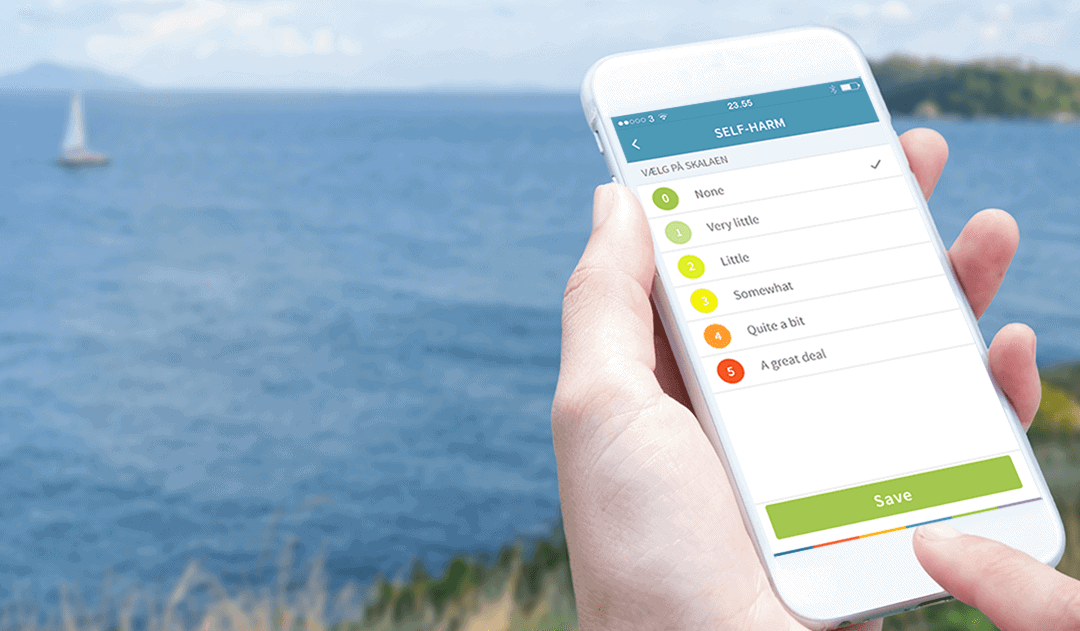
Monsenso will begin clinical trials of smartphone-based DBT (Dialectical Behavioural Therapy) for patients with Borderline Personality Disorder in collaboration with the Mental Health Services in the Region of Southern Denmark (MHS).
Smartphone-based DBT
The objective of the mDiary Study is to evaluate the Monsenso mHealth solution for borderline patients with respect to reliability, validity and clinical efficacy as an adjunct to DBT.
Borderline is a severe mental disorder characterised by difficulties with regulating emotions, leading to unstable and self-destructive behaviours. Borderline is difficult to treat, especially when co-occurring with other disorders. DBT is the best validated treatment for borderline, showing an improved health outcome compared to other types of treatment.
DBT uses skills training and self-monitoring as the pillar of treatment, teaching patients to regulate their emotions and reduce problem behaviour. Traditionally, self-monitoring was made through paper-based self-assessments. However, new technology has generated an alternative to ecological momentary assessments of problematic behaviours with the additional functionality of prompting patients to practice skills targeting emotion regulation.
Methods
Participants will be borderline patients from psychiatric DBT units. The study includes two phases: the first phase will be a three-month pilot study where patients will be randomised to use either the pen and paper version of the diary card or the Monsenso mHealth app. The number of missing data will be compared, and data quality of the app versus established clinical measures will be evaluated. User satisfaction will be assessed with focus group interviews.
The second phase will include a two-year multi-centre randomised controlled trial. In both conditions patients will be followed for one year. Half of the patients will receive the mHealth app that includes mobile DBT (mDBT) coaching suggestions and instructions on how to use it. The second half will be asked to download an app that only collects sensor data, but will continue to use the traditional paper-based self-assessments.
Expected results
The mDiary Study will prove that the Monsenso smartphone-based DBT is a reliable and valid way to collect patient-data, helping individuals learn these skills at home, speeding up their recovery.
To read the press release click here.

Jan 27, 2016
Copenhagen, Denmark – 27 January 2015. Monsenso, a Copenhagen-based technology company, announced today that UK-based, St Andrew’s Healthcare, will implement a new mHealth solution for borderline and depression patients. The mHealth solution, designed and developed by Monsenso, will be used to support the person-centred treatment of inpatients.
Thomas Lethenborg, CEO at Monsenso ApS, said that St Andrew’s will conduct a six-month service evaluation feasibility study to determine if the mHealth solution for borderline and depression patients should also be used to help treat other mental health illnesses.
“St Andrew’s Healthcare has a commitment to providing the best inpatient and outpatient mental health services in the UK. With the implementation of the Monsenso mHealth solution, clinicians will have access to patient’s historical aggregated data that will help clinical staff in the treatment of complex mental health illnesses,” Mr Lethenborg added.
St Andrew’s Healthcare Director of Nursing and Quality, Lesley Boswell said the trial would allow them to investigate how real-time mood monitoring could be used to enhance patient care.
“We are continuously looking to improve our understanding of patient experiences and this technology will help us to access previously hidden mood signals. With a bit of configuration, our aim is to use the technology to help support the therapies and treatment we currently provide to our patients, with views to expanding the programme to other care pathways in the future,” said Ms Boswell.
The Monsenso mHealth solution for borderline and depression is based on a double-loop treatment model. On one side, patients use a smartphone to fill in routine self-assessments that reveal their current state of mind and collect sensor data. The smartphone app also works as a self-management tool that allows patients to manage their symptoms and the behaviours that trigger those symptoms.
On the other side, clinicians use a web portal where they can access all the data collected by the patients’ smartphones anytime, anywhere. The web portal enables clinicians to view relevant information related to each patient.
With more than 4000 employees, St Andrew’s Healthcare delivers effective treatment, therapies, clinical consultancy, vocational rehabilitation and outpatient care across its four sites. The charity provides specialist and secure care pathways in mental health and neuropsychiatry and provides care for young people, adults, and seniors.
For additional information contact:
Jennifer Highland
Marketing and Communications Manager
Monsenso
+45 81 71 7713
highland@monsenso.com
Bonnie Sleeman
Communications Coordinator
St Andrew’s Healthcare
+44 1604 872946
bsleeman@standrew.co.uk You can download this article as PDF in English and Danish
Jan 26, 2016
Monsenso will begin clinical trials to support the treatment of anxiety disorder in collaboration with The Mental Health Services in the Region of Southern Denmark (MHS).
The Anxiety Monitoring Study
The objective of the study is to implement and validate the Monsenso mHealth solution to support the treatment of anxiety disorders.
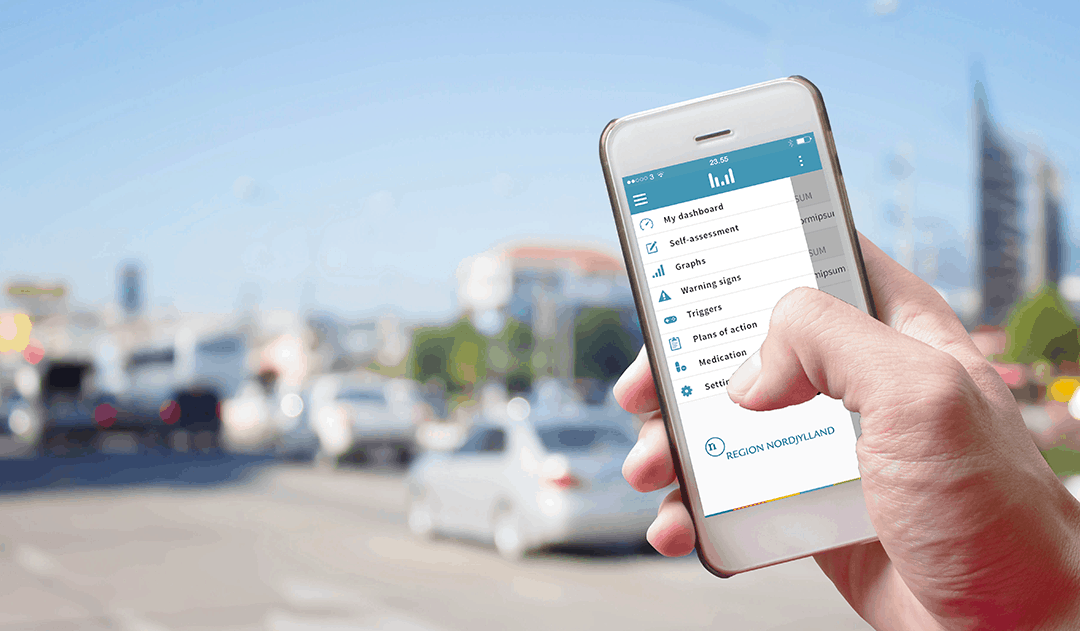
The Monsenso mHealth platform uses a double-loop treatment model to connect care providers and individuals. Currently, it is being used to collect patients’ self-rated status and sensor-based behavioural data on a daily basis.
Recent advances in mobile technologies have created more opportunities for assessments and treatments to be available to people in situations where they are most needed. Personal health technologies can collect patients’ self-rated status and sensor-based behavioural data (e.g., physical activity, phone usage, social activity) on a daily basis.
The information gathered this way provides feedback on treatment progress to both care providers and individuals. Moreover, it also supplies ecological momentary interventions (EMI), for instance, by prompting individuals to do assignments depending on the context and patients’ current status.
Regarding anxiety disorders, mobile health solutions can be useful in assisting patients to use skills learned during treatment in real life situations, as well as to monitor and give feedback on progress or lack of progress during therapy. This feedback leads to better outcomes for patients not responding well to treatment.
Pilot study: The feasibility of the solution will be evaluated using a qualitative and quantitative study without a control group involving 30 patients for three months examining usability and usefulness of the solution for both patients and clinicians.
Participants: Anxiety Patients in Routine and Special Care Settings in Southern Denmark.
Expected results: The study will result in the development of a solution based on user needs. The platform will be a feasible, usable and useful intervention.
Implementation: If the results of the feasibility study are promising, the study results will be used to improve the mHealth solution and develop version 2. Afterwards, a randomised controlled trial (RCT) will be conducted to examine outcome related effects of the solution, such as rate of recovery. If the feasibility and outcome of the RCT studies are positive, it is expected that there will be interest in implementing the mHealth solution in routine and specialized care settings around the world.
To read the press release, click here.