Jun 21, 2016
Copenhagen, Denmark – 21 June 2016. Monsenso, a Copenhagen-based technology company, announced today that the NHS Foundation Trust of Central Northwest London (CNWL) will implement the Monsenso mobile health (mHealth) solution to support the treatment of young patients suffering from schizophrenia.
The pilot, which will run from July to December, will be implemented amongst young patients aged 18 to 24, across Kensington, Chelsea, Westminster, Milton Keynes, and Hillingdon. It will be the first step prior to rolling out the solution more widely and fully integrating it with TTP SystmOne enabling clinicians to access all patient data from one place.
The objective of the pilot is to evaluate the clinical and economic benefits of using the Monsenso solution such as reducing the number of psychiatric readmissions and using the latest technology to collect and analyse patient data.
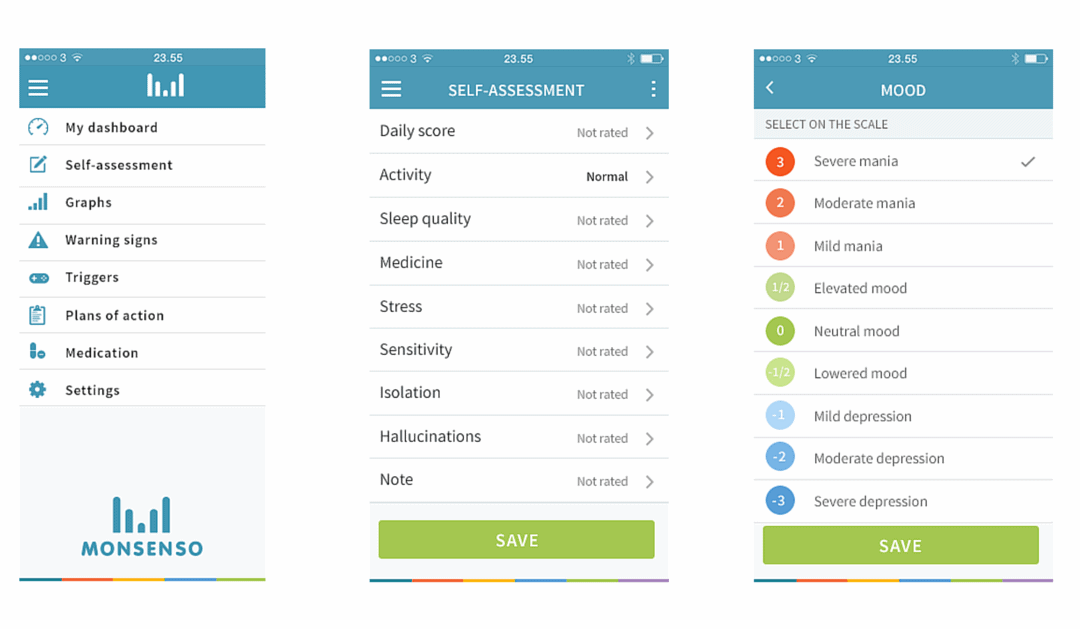
With the help of the Monsenso mHealth solution, clinicians will be able to identify the triggers and early warning signs of the young patients and intervene at an early stage to avoid emergency situations. The clinical web portal provides clinicians with an insight into the correlation between a patient’s behavioural patterns and the illness enabling them to provide a more informed and better treatment to a larger number of patients.
Thomas Lethenborg, CEO at Monsenso ApS, said “CNWL aims to offer its patients high-quality treatment with the latest technology available. With the implementation of the Monsenso mHealth solution, clinicians will be able to access a patient’s historical aggregated data, which will help them offer a better treatment based on evidence.”
Dr Pramod Prabhakaran, Divisional Medical Director of CNWL, said “We are working closely with our service users, partners, and stakeholders to be more responsive towards people’s needs. The implementation of the Monsenso mHealth solution is part of a wider service redesign to improve our community mental health services across North West London.”
For additional information about Monsenso contact:
Jennifer Highland
Marketing and Communications Manager
Monsenso
+45 81 71 7713
highland@monsenso.com
For additional information about CNWL contact:
Mike Waddington
Communications Director
CNWL
+44 77 40 42 28 73
mikewaddington@nhs.net
About CNWL
Central and North West London NHS Foundation Trust is one of the largest trusts in the UK, caring for people with a wide range of physical and mental health needs. We provide a wide range of services to treat people with a variety of health needs. In broad terms, these include common physical health problems, long-term conditions, mental health, learning disabilities, eating disorders, addictions and sexual health. We are here to provide support for people through every stage of life. The majority of our services are provided in the community, which means treating people in their homes or from clinics close to home. Where community care is not possible we offer a number of facilities to treat people in the hospital or residential environments. We also provide healthcare in prisons in London and the surrounding areas. We are committed to providing services that meet the needs of the people who use them, and we actively encourage involvement from local people who can help make a difference.[/vc_column_text][vc_column_text]You can download this article as PDF in English and Danish

Jun 13, 2016
Family caregivers are essential in helping people suffering from mental illness integrate into the community. However, this role is often challenging and has a huge impact on the caregiver’s personal life.

May 30, 2016
Monsenso, mHealth for mental health helps optimise the treatment of most major mental illnesses such as bipolar disorder, schizophrenia, borderline, depression, anxiety and PTSD.


May 24, 2016
In 2011, the European Union commissioned the Impact Consortium to write a report in regards to “The long-term mental health care for people with severe mental disorders.”
This blog post explores the principal issues involved in the long-term care of individuals suffering from severe mental systems mentioned in the report, and how some of these issues can be partially solved with the use of mobile health technology.
The long-term care of people suffering from severe mental disorders is one of the most significant challenges for the health care systems since the impact they have on individuals, families and societies is huge.
According to the report, schizophrenia has an estimated point prevalence of 0.4% and a lifetime risk of 1%, which means that 1 in every 100 people will suffer from schizophrenia during their lifetime. It is the 7th most important illness in terms of years lived with disability, accounting for 2.8% of disability caused by all illnesses. For people aged 15 to 44 years, it is the 3rd most important disease, accounting for 4.9% of disability resulting from all illnesses.
During the last few decades, the European Union has made a huge effort to overcome these barriers and to ensure high-quality longer-term care for people with severe mental disorders. These efforts started in the 60’s with the development of new pharmacological treatments for psychoses, which radically changed the prognosis of severe mental illness. In the 70’s and the 80’s, there was an emergence of new psychosocial interventions and new concepts of mental health care organisations [1].
Nowadays, there is a need to shift the health care model. The transition from traditional large psychiatric institutions to modern comprehensive community-based models of care, including acute patient units at general hospitals [1].
According to the report, this shift is necessary due to the following reasons:
- Accessibility to mental health care of people with longer-term mental disorders is much better with community-based services than with the traditional psychiatric hospitals
- Community-based services are associated with greater user satisfaction and increased met needs. They also promote better continuity of care making possible to identify and treat more often early relapses
- The community-based services protect the human rights of people with mental disorders and prevent stigmatisation of those people
- Studies comparing community-based services with other models of care consistently show significantly better outcomes on adherence to treatment [1]
However, European healthcare systems need to make lots of alterations if they want to provide accessible, effective, high-quality and long-term care to people suffering from severe mental disorders.
Challenges of the transition to new comprehensive community-based models of care
One of the main reasons why the development of long-term mental health services is insufficient is due to the lack of coordination between the different health services. A close coordination, and even joint funding and management of health and social care services is fundamental to cope with the new challenges European mental health systems are now facing. [1].
According to the report, these are the key principles to organise mental health services:
- Accessibility: Essential mental health care should be available locally, including outpatient and inpatient care, as well as rehabilitative care. Local services provide continuity of care in a satisfactory manner.
- Comprehensiveness: Mental health services should include all facilities and programmes required to meet the essential care needs of the populations.
- Coordination and continuity of care: People suffering from severe mental disorders often find it extremely difficult to gain access to various basic services; therefore, it is crucial that services work in a coordinated manner. This coordination should also include services that are not directly related to health, such as social services and housing services.
- Effectiveness: Service development should be guided by evidence of the effectiveness of particular interventions. For example, there is a growing evidence base of effective interventions for many mental disorders, among them depression, schizophrenia and alcohol dependence.
- Equity: A person’s access to services of good quality should be based on need. It is quite often that the people who need these type of services the most are the least able to ask for help.
- Respect for human rights: Services should respect the autonomy of persons with mental disorders, and encourage such persons to make decisions affecting their lives and treatment [1].
The solution
The Monsenso mobile health solution can facilitate five of the six points mentioned in the report to organise mental health services in an optimal way.
- Accessibility: With mobile technology and telehealth, care providers can reach patients living in remote locations at a minimal cost. These technologies offer care providers more flexibility to deliver health care while on-the-go or from different locations—expanding the clinic’s service offerings [2].
- Coordination and continuity of care: The Monsenso mobile health solution can facilitate and support the care of patients suffering from severe mental illnesses from community-based models. Due to its cloud-based model and unlimited scalability, patient records can be accessed by multiple organisations such as psychiatric institutions, general practitioners, and social services, among others.
- Effectiveness and equity: With help of the Monsenso smartphone app, care providers can identify on a daily basis triggers and early warning signs of all patients in the system. With the Monsenso mHealth solution clinicians can prioritize caring for individuals who need immediate attention and continue to monitor individuals who are stable. According to the National Institute of mental health, early intervention is critical to treating mental illness before it can cause tragic results such as serious impairment, unemployment, homelessness, poverty, and suicide [4].
- Respect for human rights: The Monsenso smartphone app enables patients to fill in daily self-assessments and write notes about how they feel. The information collected from these assessments is shared with the clinic, allowing individuals to be more involved with their treatment. The Monsenso smartphone app also provides individuals with customised action plans that act as guidelines in case their symptoms appear enabling individuals to take responsibility for their behaviours and actions.
References:
[1] The long-term mental health care for people with severe mental disorders. J.M Caldas de Almeida, H. Killaspy. Prepared under service contract with the Impact Consortium by the European Commission. 2011.
http://ec.europa.eu/health/mental_health/docs/healthcare_mental_disorders_en.pdf
[2] Increasing access to behavioural health care through technology. The U.S. Department of Health and Human Services Health Resources and Services Administration (2013, February).
http://www.hrsa.gov/publichealth/guidelines/behavioralhealth/behavioralhealthcareaccess.pdf
[3] Directors Blog: SAMHSA and NIMH partner to support early intervention for serious mental illness. P. Hyde and T. Insel. National Institute of Mental Health Blog (2014, June 17)
http://www.nimh.nih.gov/about/director/2014/samhsa-and-nimh-partner-to-support-early-intervention-for-serious-mental-illness.shtml
[4] Evidence based treatment for first episode of psychosis: Components of coordinated specialty care. PHD R. K. Heinssen. RAISE NIMH (2014, April 14).
http://www.nimh.nih.gov/health/topics/schizophrenia/raise/nimh-white-paper-csc-for-fep_147096.pdf