
Sep 28, 2016
Baby Blues occur within the first three days after birth and may last until a few weeks later. It is expected that between 60 to 80% of new mothers experience baby blues [1].
However, is estimated that 10 to 15% of new adult mothers develop Postpartum Depression (PPD) within the first year after giving birth, and the percentage increases up to 26% in adolescent mothers [1].
Furthermore, a recent study made with women suffering from bipolar disorder, indicated that 67% of them had a depressive episode after the first child, and they all experienced a relapse with their next birth [1].
According to Dr. Shoshanna Bennett, there are two main ways to differentiate Baby Blues from PPD. Firstly, Baby Blues always begin in the first few days following delivery and should be gone two weeks after childbirth. Besides, the symptoms are mild – frequent tearfulness, feelings of dependence and stress [2].
Unlike Baby Blues, the severity of the postpartum depression disrupts a woman’s ability to function. Therefore, if the symptoms are severe enough and last more than two weeks, it can be considered PPD and she should seek help [2].
While PPD is a major health issue for many women, it often remains undiagnosed. Although several measures have been created to detect depressive symptomatology in women who have recently given birth, the development of a postpartum depression screening program requires careful consideration [3].
Evidence-based decisions need to be made regarding two aspects. Firstly, healthcare systems need to develop an effective screening test that not only has good sensitivity and specificity, but is also quick, easy to interpret, readily incorporated into practice, and culturally sensitive. Second, health care systems should use these tools as a cost-effective, potential harm, and policies for a referral [3].
Fortunately, preliminary research suggests postpartum depression is responsive to treatment interventions thus providing a rationale for the development of a screening program [3].
The Monsenso mHealth solution can help healthcare professionals identify PPD at an early stage. New mothers can be asked to download the app and fill in self-assessments on their smartphones on a daily basis. With the self-assessments, new mothers can rate themselves on relevant parameters such as their levels of stress, anxiety, and tearfulness, as keeping track of the number of hours they slept within a 24-hour period. The system can also collect sensor data such as their level of physical activity, social activity and mobility.
Healthcare professionals can monitor new mothers on a regular basis and contact them if the system indicates any triggers or early warning signs that their Baby Blues is evolving into PPD. It is important to take into consideration that the early intervention of PPD reduces the long-term disadvantages that PPD causes for mother and child.
Current research suggests that postpartum depression has salient but selective effects on the mother/infant relationship, and child growth and development. Young children of mothers with postpartum depression have greater cognitive, behavioural, and interpersonal problems than children of nondepressed mothers. Overall, it is exposure to prolonged episodes of postpartum depression or to recurrent episodes of maternal depression that are most likely to have long-term effects on the child [3].
References:
- The Environmental, Cultural, Relational and Physiological Aspects of Postpartum Depression. The Faculty of the Adler Graduate School. Joanne E. Campbell. 2010.
http://www.alfredadler.edu/sites/default/files/Campbell%20MP%202010.pdf
- Do you have Baby Blues or Postpartum Depression? PBS.Org. Dr. Shoshanna Bennett.
http://www.pbs.org/thisemotionallife/blogs/do-you-have-baby-blues-or-postpartum-depression
- Postpartum Depression: Literature review of risk factors and interventions. Toronto Public Health. 2003.
http://www.who.int/mental_health/prevention/suicide/lit_review_postpartum_depression.pdf
Sep 14, 2016
Approximately 450 million people worldwide suffer from mental disorders. One fifth of teenagers under the age of 18 suffer from developmental, emotional or behavioural problems, and one in eight have a mental disorder. Five of the ten leading causes of disability worldwide are psychiatric conditions, including depression, alcohol abuse, schizophrenia, and obsessive compulsive disorder. [1]
The Institute of Medicine Report has proposed a framework of mental health intervention for mental illness based on the classification and the public health distinctions between primary, secondary and tertiary prevention. [1]
Primary prevention focuses on promoting mental well-being, and decreasing adverse conditions such as child abuse, violence, discrimination, poverty, and lack of education to the general population. It also seeks to target individuals or subgroups of the population whose risk of developing a mental illness is higher due to biological, psychological or social risk factors.
Secondary prevention seeks to reduce the symptoms and decrease the number of episodes through early detection and treatment. [1]
Tertiary prevention includes interventions that reduce disability, enhance rehabilitation, and prevent relapses and recurrences of the illness. [1]
A Dutch study found a 50% reduction in the incidence of major depression among mildly depressed primary care patients who received a stepped-care intervention, compared with the incidence among primary care patients who received treatment as usual. Other studies showed that low-dose antidepressants or problem-solving therapy helped reduce the incidence of major and minor depression in post-stroke patients. [2]
Preventive measures such as mental health promotion and early intervention are the most cost-effective way to tackle mental illness on a global scale. Research reveals that common mental disorders such as depression and anxiety can be prevented. For instance, Cognitive Behavioural Therapy (CBT) has proven to be useful for people who already have mild depressive symptoms.
During the last few years, technology has crossed a new frontier in mental health support and data collection. Mobile health (mHealth technology) provides doctors, researchers and the general population with new ways to monitor a patient’s progress, access self-help tools, and increase understanding of mental wellbeing.
Mobile mental health support can be very simple but effective. For example, the Monsenso mHealth solution which consists of a smartphone app for patients and carers and web portal for clinicians uses self-reported data and the device’s built-in sensors to collect patient information. Based on the self-reported data, the Monsenso smartphone app identifies any triggers or warning signs, and it notifies patients and clinicians that help is needed before a crisis occurs. The Monsenso smartphone app also provides users with self-help tools that are always available in case of an emergency.
Although there are many mental health apps available on both the iTunes and Android app stores, this new technology includes a lot of uncertainty. There isn’t enough information on the quality, security and effectiveness of the different apps available, which can confuse clinicians and users.
The advantages of mental health apps
Experts believe that technology has a lot of potential for users and clinicians. A few of the benefits of mobile care include:
- Convenience:Treatment can take place anytime and anywhere (e.g. at home in the middle of the night or on a bus on the way to work) and may be ideal for those who have trouble with in-person appointments.
- Anonymity:Clients can seek treatment options without involving other people.
- An introduction to care: Technology may be a good first step for those who have avoided mental health care in the past.
- Lower cost: Some apps are free or cost less than traditional care.
- Service to more people: Technology can help mental health providers offer treatment to people in remote areas or to many people in times of sudden need (for example following a natural disaster or terror attack).
- Interest: Some technologies might be more appealing than traditional treatment methods, which may encourage clients to continue therapy.
- 24-hour monitoring: Technology can provide round-the-clock monitoring and self-help tools or interventions.
- Consistency: Technology can offer the same treatment plan to all users.
- Support: Technology can complement traditional therapy by extending an in-person session, reinforcing new skills, and providing support and monitoring. [3]
Trends in smartphone apps for mental health
- Self-management apps
Users enter self-reported data into the app so it can provide feedback. For example, medication reminders, stress-coping strategies or sleep problems. Some apps can also track sensor data and may help users monitor their progress and receive feedback.
- Apps to improve thinking skills and skills training
Apps that help users with improved thinking skills (cognitive remediation) and learn new coping or thinking skills. For example, they provide educational videos about anxiety management or the importance of social support. Additionally, users might pick up some new skills and use the app to practice those skills. This type of app may feel a little bit like a game, and often target people with severe mental illness.
- Supported care
This type of app allows users to interact with a trained health care provider or a peer support group who can offer guidance in case of an emergency.
- Monitoring and data collection
This type of mental health app can collect two types of data. On one hand, it gathers data using the sensors built into smartphones such as movement patterns, social interactions, behaviour at different times of the day, speech patterns and more. On the other hand, it collects self-reported data in the form of a mood diary or electronic questionnaire.
Although mental health apps may not replace mental health professionals, they allow clinicians to provide better support to more people regardless of their geographical location.
References:
[1] Prevention of mental disorders. Effective interventions and policy options. World Health Organisation. http://www.who.int/mental_health/evidence/en/prevention_of_mental_disorders_sr.pdf
[2] The future looks promising for mental health prevention. Psychiatric News. Joan Arehart-Treichel. 2013 (January 18). http://psychnews.psychiatryonline.org/doi/10.1176/appi.pn.2013.10b1
[3] Technology and the future of mental health treatment. National Institute of Mental Health. http://www.nimh.nih.gov/health/topics/technology-and-the-future-of-mental-health-treatment/index.shtml

Aug 30, 2016
Copenhagen, Denmark – 30 August 2016. Monsenso, the Copenhagen-based technology company developing mHealth solutions for mental illnesses, today announced a partnership with The Black Dog Institute in Australia.
Black Dog Institute is a pioneer in the identification, prevention and treatment of mental illness and the promotion of well-being. The Institute will conduct feasibility studies to determine if the Monsenso mHealth solution can be used to collect much needed data for a number of large-scale mental health trials.
“The mission of Monsenso and that of Black Dog are highly aligned. We both aim to enable better mental health care through innovation and science, therefore this is an exciting moment for both parties” said Thomas Lethenborg, CEO at Monsenso. “Monsenso is looking to build sustainable, long-term partnerships, with the ultimate goal of delivering better care, to more people, and at lower cost.”
As part of the on-going collaboration between Monsenso and the Black Dog Institute, Mads Frost, Chief Product Officer of Monsenso, has been invited to participate as a guest-speaker at the conference “Humans and Machines: A Quest for Better Mental Health” organised by Black Dog.
Helen Christensen, Director of the Black Dog Institute, said the trial would allow them to collect real-time information using a device that most people carry at all times – their Smartphone. “Our focus will be on collecting self-reported daily mood ratings and activity data that may be used to predict changes in mental health conditions over time. Ultimately these sorts of tools can be used to deliver real time assistance to those in distress at the time they most need help. However, like all good research and development projects, our aim is to test the validity of these approaches; their feasibility and the extent that they can provide better health care services. Ultimately, we hope to use these sorts of tools in our national programmes involving youth mental health and suicide prevention.”
The Monsenso mHealth solution for mental illnesses holds a CE mark and a TGA certification and it has been technically and clinically validated in clinical evaluation studies and randomised clinical trials. Furthermore, Monsenso is in the process of obtaining the ISO 13485 and ISO 27001.
For additional information contact:
Jennifer Highland
Marketing and Communications Manager
Monsenso
+45 81 71 7713
highland@monsenso.com
Gayle McNaught
Head of Public Affairs
The Black Dog Institute
g.mcnaught@blackdog.org.au
About The Black Dog Institute
The Black Dog Institute is a not-for-profit organisation which is internationally recognised as a pioneer in the identification, prevention and treatment of mental illnesses, and the promotion of well-being. We are dedicated to improving the lives of people affected by mental illness through the rapid translation of high quality research into improved clinical treatments, increased accessibility to mental health services and delivery of long-term public health solutions. Our unique approach incorporates clinical services with our cutting-edge research, our health professional training and community education programs. We combine expertise in clinical management with innovative research to develop new, and more effective, strategies for people living with mental disorders. For more information visit www.blackdoginstitute.org.au
You can download this article as PDF in English and Danish

Aug 23, 2016
This blog post was written by Anne Zieger, CEO at Zieger Healthcare Communications. It was originally published in the Zieger Healthcare Blog and it is © published with the permission of Zieger Healthcare.

Like many Americans, I have a family member with a major mental illness who sometimes needs inpatient hospital care. Because I have been a healthcare researcher and journalist for 25 years, I’m particularly well prepared to help him navigate the system and get him the attention he deserves.
But there’s one issue which crops up again and again, and despite decades of trying I haven’t been able to find any kind of remedy. And as far as I can tell, this policy — which is universal in my region — actually encourages the delivery of substandard care.
As many people are aware, there’s far too few inpatient mental health beds in many regions of the country. My sense is that the problem may be a bit less acute where I live, in metro DC, as my relative can generally find inpatient care when he needs it. But which bed in which hospital? That’s another story.
Like any other service, inpatient mental health treatment can vary substantially from one institution to another. And as a member of a family support group for mental health problems, I get lots of feedback on which psych units are well-staffed, clean, efficient, thorough, kind to patients and good with discharge planning. (Of course, I also have my relative’s feedback and my own impressions to refer to as well.)
However, area hospitals with psych units absolutely, categorically refuse to tell patients or their families whether a bed is available. Yes, they will typically tell a psychiatrist with admitting privileges whether they can take additional patients, but for reasons which are not clear to me, a shrinking number of psychiatrists choose to obtain such privileges. In fact, in many years of trying, my relative hasn’t found a single one who does do direct admissions.
So here’s what happens. Our family realizes that he needs help, so one of us takes him to a hospital where he feels comfortable and safe. That hospital puts him through several hours of “medical clearance,” and only then do they let us know that there are no open beds there. Then they try to convince us to take whatever bed is available anywhere they can find.
In the most recent case, they pressured us to send him to Hospital X, an underfunded, poorly-rated facility which I’d dearly love to see decertified and closed. Since his episode seemed to be tailing off, we decided to take him home and bring him to another good facility the next day, which we did, successfully. But given the coercive nature of the original facility’s approach, it took all of the strength we could muster to do so.
I am certainly aware that with the limited availability of psych beds, every hospital will turn patients away at times. But if the hospitals let patients and/or family members know whether there was even a chance of admission, patients could make informed choices. They could also choose between their preferred hospitals, rather than being side-tracked into those that did not deserve their patronage.
My guess is that such hospitals, whose psych units are often unprofitable, are colluding to make sure that the more effective, humane and resource-rich psych units don’t get all of the traffic. After all, if patients don’t know which units can serve them, it’s easier for facilities to ricochet them across the region and give some of the inpatient days to whichever player is next in line.
But even if there’s no conspiracy involved, the policy of keeping patients out of the loop is unconscionable nonetheless. If patients end up wherever they’re sent, hospitals have no incentive to offer improved services. And that just about defines “anti-competitive.” I dearly hope someone calls these hospitals to account someday.
To view the original blog post click on this link: http://www.ziegerhealthcare.com/2016/08/21/hospital-policies-make-it-tougher-to-get-high-quality-inpatient-mental-health-treatment344/

Aug 18, 2016
mHealth technology is a cost-efficient solution for insurance companies. Technology start-ups are disrupting many existing business models, including the insurance industry. Most of the current trends in the insurance industry have technology as a driver.
By 2020, the global Internet of Things market is expected to reach 1.7 trillion USD, and the number of connected devices is expected to reach 29.5 billion. Due to the low cost of sensors, improved communication methods, and increased data processing power, mHealth solutions are now becoming a cost-efficient solution for insurance companies, therefore, insurers are increasingly leveraging the Internet of Things for various purposes, including identification of customers’ needs and risks.
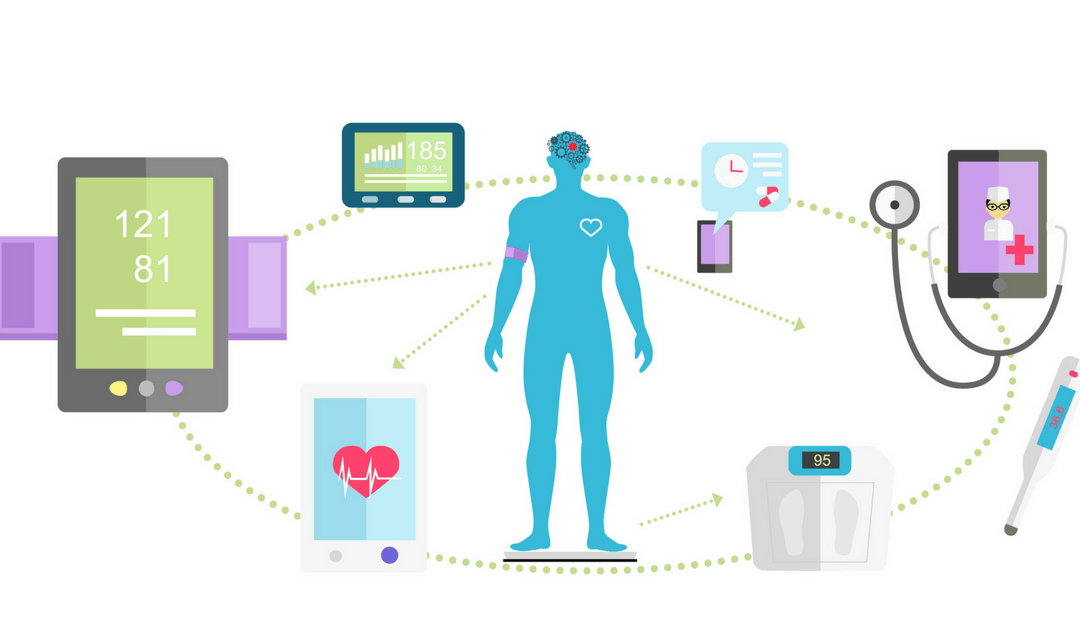
Mobile health (mHealth) technology and Big Data are also expected to have a significant impact on the insurance industry on both insurers and customers. The most common uses of mHealth technology are: to prevent illnesses, to monitor patients remotely, to support treatment and to serve as self-help tools. Insurers are focusing on mHealth apps to monitor and improve the health of their customers, and to reduce their healthcare spending.
Some of the key determinants of a person’s health include lifestyle, environment, and hereditary traits. Therefore, the data obtained from mHealth apps can be used as a cost-efficient solution for insurance companies that helps them to understand a customer’s risk profile. For example, with all the information collected by a person’s smartphone, insurance companies can predict how likely that person is to be affected by an illness and implement a preventive action.
MHealth technology can help reduce administrative costs of health insurers since all the customers’ data is readily available, which makes policy renewals easier. Besides, insurance companies can also use this data to cross-sell insurance policies to their existing clients.
Since the cost of healthcare is on the rise, insurance companies need to adopt new methods to reduce this, and mHealth solutions allow customers to maintain a healthier lifestyle with lower spending.
Until now, patient adherence to medication has been a big challenge in the healthcare industry. For conditions such as depression, the adherence rate is as low as 50%. This non-adherence increases the healthcare spending of customers.
However, mHealth apps, such such as the Monsenso mHealth solution for mental illness, can help reduce the healthcare spend. These smartphone apps can remind customers to take their daily medication, reinforce the need to follow a medication schedule, educate patients about their illness, and inform patients of the consequences of not taking their medication.
If you want to know more about how can the Monsenso mHealth solution for mental health can help your insurance company save costs, click here.
Reference:
Top 10 Trends in Insurance in 2016. Capgemini Insurance. 2016
https://www.capgemini.com/resources/insurance-top-10-trends-2016