

Monsenso enters partnership with psychiatric clinic in Greece

Monsenso enters partnership with psychiatric clinic in Greece

Monsenso has entered into a partnership agreement with the Greek psychiatric clinic Tzeranis Psychis Omma to deploy the solution in their clinic from Q2 2022 and drive market expansion of the Monsenso solution on the Greek market.

In 2019, 18% of the Greek population was living with a mental illness [1] – since then, the Covid-19 pandemic has led to a significant rise in mental health problems [2]. At the “Meeting of Minds on Quality of Care” conference hosted by WHO/Europe in Athens in December 2021, the necessity to “improve the quality of mental health care for children and adolescents” was emphasised, particularly in light of the Covid 19 pandemic [3]. Greek officials have further highlighted the significance of patient-centricity in mental health services in particular [2].

Psychis Omma has supported individuals with psychological and psychiatric illnesses for over 50 years, aiming at “offering a better life for people suffering from mental disorders, both to themselves and their families” [4]. The clinic provides both inpatient hospitalisation in their facilities in Nea Penteli, close to Athens, as well as (online) psychological support services and external observation [4]. 

The Monsenso Digital Health Solution will be implemented in Psychis Omma’s clinical practice as a tool to support patients in their treatment pathway and to facilitate early intervention and crisis reduction. Moreover, Psychis Omma Mental Health Solutions will act as a partner of Monsenso in Greece, advocating for the benefits of using digital support tools in mental health settings and actively marketing the Monsenso solution on the Greek market.

The Monsenso app for individuals helps patients to keep track of their well-being, symptoms, and medication intake through self-reported data, as well as their behaviour through sensor data collected on mobile phones. The historical data is visualised and helps individuals remember how they have been doing, e.g. between support sessions. It also helps them gain better insight into the behaviours that trigger their symptoms, empowering them to better manage their condition. Healthcare providers access the user data via a web portal for professionals, enabling them to see fluctuations in the mental state of the patients. This can help to predict relevant outcomes and reduce potential relapses and readmissions.

“We are excited to bring the Monsenso Solution to Greece and work with Psychis Omma as a partner who values enabling people with mental illnesses to live better, more independent lives as highly as we do.”, says Thomas Lethenborg, CEO of Monsenso.

“We are looking forward to working with Monsenso as a partner in Greece and to using their digital health solution to offer improved treatment support to more patients. Remote patient monitoring will open new doors to us in terms of our capabilities to actively support individuals outside of treatment sessions.”, says Spyros Tzeranis, Scientific Director of Tzeranis Psychis Omma.

About Tzeranis Psychis Omma 
Tzeranis Psychis Omma is a Greek Neuropsychiatric Clinic founded in 1971, providing specialist health services and supporting individuals with various psychological and psychiatric illnesses. Working with highly experienced and trained nursing and medical staff, the clinic offering both inpatient care and external psychological support aims at enabling more individuals suffering from mental illness to live better lifes.
To learn more visit tzeranis.gr.

About Monsenso
Monsenso is an innovative technology company offering a digital health solution used for decentralised trials, remote patient monitoring and treatment support. Our mission is to contribute to improved health for more people at lower costs by supporting treatment digitally and leveraging patient-reported outcomes data. Our solution helps optimise the treatment and gives a detailed overview of an individual’s health through the collection of outcome, adherence, and behavioural data. It connects individuals, carers, and health care providers to enable personalised treatment, remote care, and early intervention. We collaborate with health and social care, pharmaceuticals, and leading researcher worldwide in our endeavours to deliver solutions that fit into the life of patients and health care professionals. To learn more visit www.monsenso.com.

[1] Stewart, C. (2021). Europe: mental disorders among adolescents in 2019, by country. Statista. https://www-statista-com.esc-web.lib.cbs.dk:8443/statistics/1273254/mental-disorders-among-adolescents-in-europe-by-country/

[2] WHO (2021). Athens Mental Health Summit – Ministers and representatives renew commitment to prioritize mental health in the WHO European Region.
https://www.euro.who.int/en/countries/greece/news/news/2021/8/athens-mental-health-summit-ministers-and-representatives-renew-commitment-to-prioritize-mental-health-in-the-who-european-region

[3] WHO (2021). WHO/Europe and Greece put quality of care at the top of the health agenda. https://www.euro.who.int/en/countries/greece/news/news/2021/12/whoeurope-and-greece-put-quality-of-care-at-the-top-of-the-health-agenda

[4] Psychis Omma Tzeranis Clinic (n.d.). Our Clinic. https://tzeranis.gr/en/our-clinic/
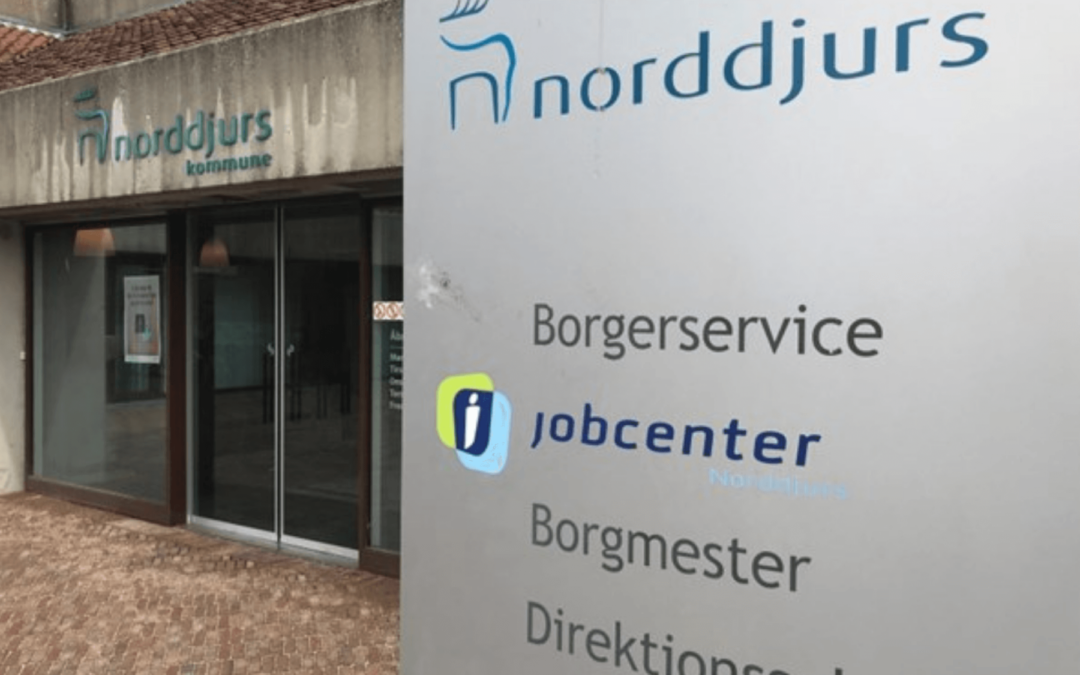
Norddjurs municipality in Denmark joins a successful back-to-work program supported by the Monsenso digital health solution

Norddjurs municipality in Denmark joins a successful back-to-work program supported by the Monsenso digital health solution

Norddjurs Municipality in the Central Jutland region joins the successful Return-to-Work program, facilitated by several partners including Empano, Sundinvest, Den Sociale Kapitalfond, AS3, PWC and supported by Monsenso’s digital health solution. From February 2022, Monsenso’s digital health solution will be deployed in Norddjurs Municipality to support individuals during their return-to-work process, while collecting real-world insights on outcomes.

The impact of COVID -19 on social care.
The disruption or shutdown of critical mental health services during the COVID -19 pandemic has led to the rapid adoption of technology-enabled care (TEC) in both health care and adult social care (ASC). Today, there is no doubt that digital technologies offer the potential to improve social care, from targeting resources where they are most needed to promote independence in the community through remote care and treatment support.

Commissioning beyond COVID -19
The adoption of technology-enabled care (TEC) also provides an opportunity to move towards a more person-centered and evidence-based model of commissioning that focuses on service delivery outcomes.

Three forward-thinking municipalities in Denmark implement an outcome-based back-to-work service provided by Empano and Monsenso

To date, two forward-thinking municipalities in Denmark (Guldborgsund and Slagelse) have implemented an outcome-based back-to-work service provided by Empano and Monsenso.

The back-to-work services are designed to help citizens with mental illness return to the labour market faster and consist of coping and motivational courses provided by Empano, offered in conjunction with the Monsenso digital health solution for remote treatment support and real wold data collection on outcomes to validate and demonstrate program effectiveness. 

Since February 2022, Norddjurs municipality in the Central Jutland region has also joined the successful program and more municipalities are expected to follow during the year.

About Monsenso
Monsenso is an innovative technology company offering a digital health solution used for decentralised trials, remote patient monitoring and treatment support. Our mission is to contribute to improved health for more people at lower costs by supporting treatment digitally and leveraging patient-reported outcomes data. Our solution helps optimise the treatment and gives a detailed overview of an individual’s health through the collection of outcome, adherence, and behavioural data. It connects individuals, carers, and health care providers to enable personalised treatment, remote care, and early intervention. We collaborate with health and social care, pharmaceuticals, and leading researcher worldwide in our endeavours to deliver solutions that fit into the life of patients and health care professionals. To learn more visit  www.monsenso.com.

To learn more, visit www.monsenso.com

Monsenso signs a new contract with Empano

Monsenso signs a new contract with Empano

Monsenso expands collaboration with Empano, a private provider of psychology and psychiatry services, signing a new contract to help citizens with stress return to work in the municipality of Slagelse.

Monsenso and Empano partnered up last year to help unemployed people get back to work faster. Together, Monsenso and Empano offer a solution for Danish municipalities to help unemployed people suffering from stress and depression return to work.
Following the successful implementation in the municipality of Guldborgssund, the services are now offered to more municipalities, starting in the municipality of Slagelse, Denmark.

Empano offers individual courses and group sessions to the employment sector in the municipalities and uses Monsenso’s digital health solution to collect self-reported data from service users to validate and demonstrate the program’s effectiveness.

The courses have a duration of 6-8 weeks each, after which new citizens are enrolled.

It is a preventative course that teaches strategies to reduce stress and promote mental health. Citizens are introduced to techniques that enable them to better cope with symptoms and challenges in everyday life and the job market, based on cognitive therapy, metacognitive therapy, and mindfulness.

“We are excited to expand our collaboration with Empano to help more people get back to work faster,” says CEO Thomas Lethenborg. “Mental health and unemployment are closely linked. While unemployment can cause stress which may have other negative consequences on people’s mental health, including depression, anxiety and lower self-esteem, a good mental health has shown to have a positive impact on employability, finding a job and staying in that job.”

Monsenso expands in the Middle East with new million deal with global pharmaceutical company

Monsenso expands in the Middle East with new million deal with global pharmaceutical company

Monsenso has entered a new million agreement with a global pharmaceutical company and hereby expands its activities to six countries in the Middle East. As part of the agreement, Monsenso will provide its solution for patient monitoring and treatment support in the United Arab Emirates, Saudi Arabia, Oman, Kuwait, Qatar and Bahrain.

Monsenso’s solution will be used to support the treatment of depression and schizophrenia. Patients are provided with an app, which is used to collect real-time patient-reported information and to give patients access to information about their disorder between consultations. Therapists gain access to a clinical web portal and can follow their patients remotely and gain valuable information about behavior, medication intake and symptoms and thus be able to provide a data-driven treatment and allow for proactive follow-up.
In addition, the solution supports communication between patients and therapists.

“We are very pleased with this agreement, which contributes to both expanding our geographic market coverage and our business with pharmaceutical companies in line with our growth strategy. ” says Thomas Lethenborg, CEO of Monsenso. “Depression and schizophrenia are among the most costly disorders for society and have major consequences for affected patients and relatives. Therefore, we are proud to be able to contribute to better treatment within these disease areas.”

The project will not affect Monsenso’s previously communicated plans and guidance for the 2020 financial year.

To read the Danish version, click here.

For additional information contact:
Bettina van Wylich-Muxoll
Chief Marketing Officer
marketing@monsenso.com
Monsenso

How electronic monitoring can assist a psychiatric medication change

How electronic monitoring can assist a psychiatric medication change

In undergoing psychiatric treatment for mental illnesses, it is very common to be prescribed medication. While medication can be an important and helpful part of treatment, the process of finding the right medication for each patient can be a tedious and sometimes hazardous process.  It is common practice for patients with mental illnesses, such as schizophrenia [1] , depression [2]  and bipolar [3], to switch through multiple psychiatric medications.

The Australian Genetics of Depression Survey, which includes 13,000 participants with clinical depression, reported that one in ten participants have used five or more antidepressants during their psychiatric treatment [2] The survey also reported that patients with depression will often cycle through multiple antidepressants using a trial and error approach to find the medication that best suits the patient. [2] However, by using the trial and error methodology, this process can take a very long before benefits are observed [2] and of more concern, patients may experience adverse health side effects from changing and stopping medication.

Adverse side-effects are an unfortunately common occurrence for patients taking psychiatric medication. The Australian Genetics of Depression Survey reported 76% of participants with clinical depression had some medication related side-effects and 38% of participants reported that side-effects of the medication were so severe that they had to either stop or change the medication. Participants in the survey reported antidepressant side-effects of nausea, headaches, drowsiness, and fatigue [2]. Other side-effects of antidepressants may include physical withdrawal pains from forgetting to take medication and ensuing anxiety over forgetting to take the medication again [4].

Adverse side-effects can also occur from abruptly stopping psychiatric medication. This can result in complications such as the rapid return of the illness being treated  [2], mild to moderate discontinuation symptoms[5], or in some severe cases, such as the cessation of a high dose of benzodiazepines, potentially life threatening seizures [5].

Fortunately, these side-effects can be reduced:

Firstly, it is strongly advised to take the medication switching or stopping process gradually, carefully, and slowly. [3] [5]

Secondly, harmful side-effects can be reduced for patients by maintaining constant engagement with their clinician through actively participating in their treatment by asking questions and providing feedback, closely monitoring their own behaviour and ensuring that their medication changes remain under active clinician supervision. [5]

Monitoring can be particularly critical to a medication switching period. According to Dr. Ross J. Baldessarini, the professor of psychiatry and neuroscience at Harvard Medical School and director of the psychopharmacology program at the McLean Division of Massachusetts General Hospital, the initial period following medication discontinuation is the most critical period and should be closely monitored, as some people may not experience the withdrawal and harmful symptoms of stopping medication for weeks, or even months after stopping the medication. [5]

Interactive electronic monitoring

An interactive electronic approach for self-monitoring offers a monitoring technique that includes a more accurate, comprehensive, and real-time assessment within naturalistic settings [6]. This type of monitoring is ideal for patients who are undergoing the medication switching process and need to constantly provide their clinician with accurate and extensive details about their mood states and behaviour.

There are several advantages to electronic monitoring as opposed to pen and paper data collection, such as:

  • Making data immediately available for analyses through online and digital formats [6]
  • By being able to log data in real time, patients are not subject to the same potential recall bias as when reporting data retrospectively using a pen and paper method. [7][8][9][10]
  • Daily information regarding patient behaviour that may have been lost due to cognitive dysfunction [6], impairments, stressful life or health factors, or simply forgetting, is readily recorded by an electronic system as opposed to depending on self-reporting with the pen and paper method.

Interactive Electronic Monitoring through Monsenso’s mHealth Solution 

Monsenso’s mHealth solution is an interactive electronic monitoring system which utilises a double loop feedback model. The first loop consists of the patient’s smartphone app and a web portal is connected to the second loop, which is the clinician’s web portal. The smartphone app uses sensors to automatically collect data from the patients, and allows patients to fill out a daily self-assessment regarding the state of their symptoms and their medicinal intake. This data is sent immediately to the connected clinician’s web portal.

Monsenso’s interactive electronic monitoring system can have these important benefits by optimising the consultation and engagement flow between patient and clinician:

  1. Offers the ability to verify the timing and compliance of data collection. [11]
  2. The smartphone app can send a daily notification with a reminder for the patient to complete the self-assessment or take their medication.
  3. Patients can fill out a customised diary note about the potential side-effects of medication or their symptoms to share with clinicians.
  4. Clinicians can obtain daily, real time, and comprehensive information about the clinical state of the patient, such as the state and occurrence of their symptoms and their medicinal intake.
  5. Patients and clinicians can obtain measures of daily variability of clinical states and behaviours of the patient.[11]
  6. This data is visualised in a line chart, where patients and clinicians can view the chart together to discover time-trends and relationships between behavioural variables and clinical states. [11]
  7. This information and awareness can foster patients to make earlier adjustments to their behaviour, as well as engage in a more focused treatment. [11]
  8. This information can also provide preparation for a clinician in administering rapid early intervention. [11]

The Monsenso mHealth solution can provide the carefully supervised and comprehensive monitoring of patients’ behaviour necessary to help ease the medication and stopping switching process.

[1] Effectiveness of switching antipsychotic medications. Susan M., et al. American Journal of Psychiatry 163.12.2090-2095. (2006)

[2] What Patients say about taking antidepressants. What patients say about taking antidepressants | 6 minutes. https://www.6minutes.com.au/node/20078

[3]  Getting Through a Major Medication Change. International Bipolar Foundation. http://www.ibpf.org/blog/getting-through-major-medication-change

[4]  My Impossible Quest for the Right Depression Meds.  I.Masad. Marie Claire. (2017, June 14) http://www.marieclaire.com/health-fitness/features/a20452/finding-the-right-depression-medication/ 

[5] Discontinuing Psychiatric Medications: What You Need to Know. M. Tartakovsky. Psych Central. (2016, July 17) https://psychcentral.com/lib/discontinuing-psychiatric-medications-what-you-need-to-know/

[6] Cognitive symptoms in patients with major depressive disorder and their implications for clinical practice. G. Papakostas. The Journal of clinical psychiatry 75.1 (2014):8-14.

[7] New technologies to improve clinical trials. Kobak, Kenneth A., et al. Journal of clinical psychopharmacology 21.3 (2001): 255-256.

[8] Patient compliance with paper and electronic diaries. Stone, Arthur A., et al. Controlled clinical trials 24.2 (2003): 182-199.

[9] The electronic assessment of the longitudinal course of bipolar disorder: the ChronoRecord software. Whybrow, P. C., et al Pharmacopsychiatry 36.S 3 (2003): 244-249.

[10] Trends in ambulatory self-report: the role of momentary experience in psychosomatic medicine. Conner, Tamlin S., and Lisa Feldman Barrett. Psychosomatic medicine 74.4 (2012): 327.

[11] Usability, Acceptability, and Adherence to an Electronic Self-Monitoring System in Patients With Major Depression Discharged From Inpatient Wards. Lauritsen, Lise, et al. Journal of medical Internet research 19.4 (2017).