

Monsenso enters partnership with psychiatric clinic in Greece

Monsenso enters partnership with psychiatric clinic in Greece

Monsenso has entered into a partnership agreement with the Greek psychiatric clinic Tzeranis Psychis Omma to deploy the solution in their clinic from Q2 2022 and drive market expansion of the Monsenso solution on the Greek market.

In 2019, 18% of the Greek population was living with a mental illness [1] – since then, the Covid-19 pandemic has led to a significant rise in mental health problems [2]. At the “Meeting of Minds on Quality of Care” conference hosted by WHO/Europe in Athens in December 2021, the necessity to “improve the quality of mental health care for children and adolescents” was emphasised, particularly in light of the Covid 19 pandemic [3]. Greek officials have further highlighted the significance of patient-centricity in mental health services in particular [2].

Psychis Omma has supported individuals with psychological and psychiatric illnesses for over 50 years, aiming at “offering a better life for people suffering from mental disorders, both to themselves and their families” [4]. The clinic provides both inpatient hospitalisation in their facilities in Nea Penteli, close to Athens, as well as (online) psychological support services and external observation [4]. 

The Monsenso Digital Health Solution will be implemented in Psychis Omma’s clinical practice as a tool to support patients in their treatment pathway and to facilitate early intervention and crisis reduction. Moreover, Psychis Omma Mental Health Solutions will act as a partner of Monsenso in Greece, advocating for the benefits of using digital support tools in mental health settings and actively marketing the Monsenso solution on the Greek market.

The Monsenso app for individuals helps patients to keep track of their well-being, symptoms, and medication intake through self-reported data, as well as their behaviour through sensor data collected on mobile phones. The historical data is visualised and helps individuals remember how they have been doing, e.g. between support sessions. It also helps them gain better insight into the behaviours that trigger their symptoms, empowering them to better manage their condition. Healthcare providers access the user data via a web portal for professionals, enabling them to see fluctuations in the mental state of the patients. This can help to predict relevant outcomes and reduce potential relapses and readmissions.

“We are excited to bring the Monsenso Solution to Greece and work with Psychis Omma as a partner who values enabling people with mental illnesses to live better, more independent lives as highly as we do.”, says Thomas Lethenborg, CEO of Monsenso.

“We are looking forward to working with Monsenso as a partner in Greece and to using their digital health solution to offer improved treatment support to more patients. Remote patient monitoring will open new doors to us in terms of our capabilities to actively support individuals outside of treatment sessions.”, says Spyros Tzeranis, Scientific Director of Tzeranis Psychis Omma.

About Tzeranis Psychis Omma 
Tzeranis Psychis Omma is a Greek Neuropsychiatric Clinic founded in 1971, providing specialist health services and supporting individuals with various psychological and psychiatric illnesses. Working with highly experienced and trained nursing and medical staff, the clinic offering both inpatient care and external psychological support aims at enabling more individuals suffering from mental illness to live better lifes.
To learn more visit tzeranis.gr.

About Monsenso
Monsenso is an innovative technology company offering a digital health solution used for decentralised trials, remote patient monitoring and treatment support. Our mission is to contribute to improved health for more people at lower costs by supporting treatment digitally and leveraging patient-reported outcomes data. Our solution helps optimise the treatment and gives a detailed overview of an individual’s health through the collection of outcome, adherence, and behavioural data. It connects individuals, carers, and health care providers to enable personalised treatment, remote care, and early intervention. We collaborate with health and social care, pharmaceuticals, and leading researcher worldwide in our endeavours to deliver solutions that fit into the life of patients and health care professionals. To learn more visit www.monsenso.com.

[1] Stewart, C. (2021). Europe: mental disorders among adolescents in 2019, by country. Statista. https://www-statista-com.esc-web.lib.cbs.dk:8443/statistics/1273254/mental-disorders-among-adolescents-in-europe-by-country/

[2] WHO (2021). Athens Mental Health Summit – Ministers and representatives renew commitment to prioritize mental health in the WHO European Region.
https://www.euro.who.int/en/countries/greece/news/news/2021/8/athens-mental-health-summit-ministers-and-representatives-renew-commitment-to-prioritize-mental-health-in-the-who-european-region

[3] WHO (2021). WHO/Europe and Greece put quality of care at the top of the health agenda. https://www.euro.who.int/en/countries/greece/news/news/2021/12/whoeurope-and-greece-put-quality-of-care-at-the-top-of-the-health-agenda

[4] Psychis Omma Tzeranis Clinic (n.d.). Our Clinic. https://tzeranis.gr/en/our-clinic/
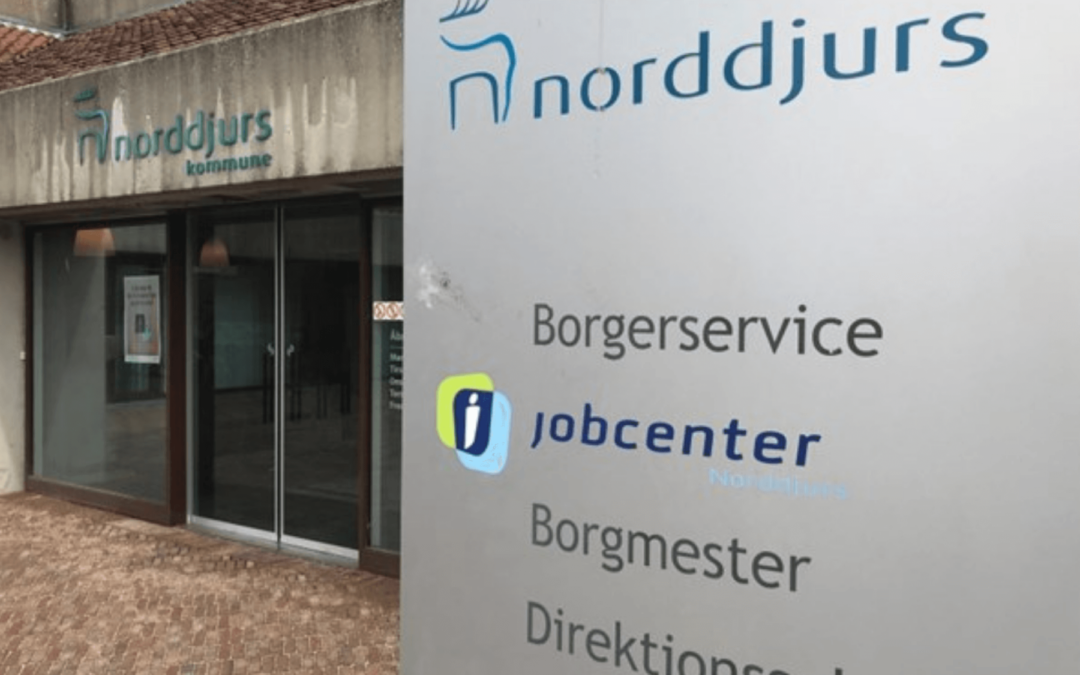
Norddjurs municipality in Denmark joins a successful back-to-work program supported by the Monsenso digital health solution

Norddjurs municipality in Denmark joins a successful back-to-work program supported by the Monsenso digital health solution

Norddjurs Municipality in the Central Jutland region joins the successful Return-to-Work program, facilitated by several partners including Empano, Sundinvest, Den Sociale Kapitalfond, AS3, PWC and supported by Monsenso’s digital health solution. From February 2022, Monsenso’s digital health solution will be deployed in Norddjurs Municipality to support individuals during their return-to-work process, while collecting real-world insights on outcomes.

The impact of COVID -19 on social care.
The disruption or shutdown of critical mental health services during the COVID -19 pandemic has led to the rapid adoption of technology-enabled care (TEC) in both health care and adult social care (ASC). Today, there is no doubt that digital technologies offer the potential to improve social care, from targeting resources where they are most needed to promote independence in the community through remote care and treatment support.

Commissioning beyond COVID -19
The adoption of technology-enabled care (TEC) also provides an opportunity to move towards a more person-centered and evidence-based model of commissioning that focuses on service delivery outcomes.

Three forward-thinking municipalities in Denmark implement an outcome-based back-to-work service provided by Empano and Monsenso

To date, two forward-thinking municipalities in Denmark (Guldborgsund and Slagelse) have implemented an outcome-based back-to-work service provided by Empano and Monsenso.

The back-to-work services are designed to help citizens with mental illness return to the labour market faster and consist of coping and motivational courses provided by Empano, offered in conjunction with the Monsenso digital health solution for remote treatment support and real wold data collection on outcomes to validate and demonstrate program effectiveness. 

Since February 2022, Norddjurs municipality in the Central Jutland region has also joined the successful program and more municipalities are expected to follow during the year.

About Monsenso
Monsenso is an innovative technology company offering a digital health solution used for decentralised trials, remote patient monitoring and treatment support. Our mission is to contribute to improved health for more people at lower costs by supporting treatment digitally and leveraging patient-reported outcomes data. Our solution helps optimise the treatment and gives a detailed overview of an individual’s health through the collection of outcome, adherence, and behavioural data. It connects individuals, carers, and health care providers to enable personalised treatment, remote care, and early intervention. We collaborate with health and social care, pharmaceuticals, and leading researcher worldwide in our endeavours to deliver solutions that fit into the life of patients and health care professionals. To learn more visit  www.monsenso.com.

To learn more, visit www.monsenso.com

Monsenso signs contract with the Norwegian University of Science & Technology

Monsenso signs contract with the Norwegian University of Science & Technology

Monsenso has signed a contract with the Norwegian University of Science & Technology to use Monsenso’s digital health solution to collect sensor data in a research project aiming at improving relapse prevention with substance use disorders.

The research study aims to improve the prediction of relapse using mobile sensing to identify a digital phenotype approach to relapse prevention. The research project is led by Anders Lauvsnes, Department of Mental Health, Faculty of Medicine and Health Sciences, at the Norwegian University of Science & Technology and covers up to 100 research participants with substance use disorders.

Mobile sensing, the use of passive data generated by personal electronic devices such as smartphones and wearables to measure human functioning, has generated considerable research interest over the past years. Particularly in the field of mental health, where the collection of continuous and objective data can lead to clinically useful biomarkers to support the prevention, early intervention, and treatment of a variety of conditions, including addiction.

“Addiction and substance use disorders are major health challenges worldwide, and relapse is a core component of addictive disorders. The dynamics surrounding relapse, and particularly the immediate period leading up to it, are only partially understood, due in large part to the difficulty of collecting reliable and sufficient data from this narrow period,” says Anders Lauvsnes. “Mobile sensing offers the opportunity to identify predictive patterns of relapse by accurately mapping behaviour. Together with data on symptoms worsening, it can help us identify a digital phenotype for relapse prevention”.

The Monsenso digital solution will be used to remotely monitor study participants, collecting sensor data from mobile phones along with sensor data from wearables (Whitings). After completion of the data collection, the data will be analysed along with neurocognitive measures using machine learning to predict imminent relapse to substance use and describe individual and temporal variability in risk.

“We are very excited to contribute to this project of creating a digital phenotype to help reduce relapse,” said Thomas Lethenborg, CEO of Monsenso. “Mobile sensing does indeed offer a data-driven method to improve condition monitoring for actionable outcomes, such as early signs of relapse, thereby ensuring the right individuals receive the right treatment at the right time”.

About Monsenso digital health solution:
Monsenso is an innovative technology company offering a digital health solution used for decentralised trials, remote patient monitoring and treatment support. Our mission is to contribute to improved health for more people at lower costs by supporting treatment digitally and leveraging patient-reported outcomes data. Our solution helps optimise the treatment and gives a detailed overview of an individual’s health through the collection of outcome, adherence, and behavioural data. It connects individuals, carers, and health care providers to enable personalised treatment, remote care, and early intervention. We collaborate with health and social care, pharmaceuticals, and leading researcher worldwide in our endeavours to deliver solutions that fit into the life of patients and health care professionals. To learn more visit  www.monsenso.com.

For additional information contact:
Bettina van Wylich-Muxoll
Chief Marketing Officer
marketing@monsenso.com
Monsenso

Monsenso expands in the Middle East with new million deal with global pharmaceutical company

Monsenso expands in the Middle East with new million deal with global pharmaceutical company

Monsenso has entered a new million agreement with a global pharmaceutical company and hereby expands its activities to six countries in the Middle East. As part of the agreement, Monsenso will provide its solution for patient monitoring and treatment support in the United Arab Emirates, Saudi Arabia, Oman, Kuwait, Qatar and Bahrain.

Monsenso’s solution will be used to support the treatment of depression and schizophrenia. Patients are provided with an app, which is used to collect real-time patient-reported information and to give patients access to information about their disorder between consultations. Therapists gain access to a clinical web portal and can follow their patients remotely and gain valuable information about behavior, medication intake and symptoms and thus be able to provide a data-driven treatment and allow for proactive follow-up.
In addition, the solution supports communication between patients and therapists.

“We are very pleased with this agreement, which contributes to both expanding our geographic market coverage and our business with pharmaceutical companies in line with our growth strategy. ” says Thomas Lethenborg, CEO of Monsenso. “Depression and schizophrenia are among the most costly disorders for society and have major consequences for affected patients and relatives. Therefore, we are proud to be able to contribute to better treatment within these disease areas.”

The project will not affect Monsenso’s previously communicated plans and guidance for the 2020 financial year.

To read the Danish version, click here.

For additional information contact:
Bettina van Wylich-Muxoll
Chief Marketing Officer
marketing@monsenso.com
Monsenso

Health care providers need to adopt mHealth technology to keep up with patients’ expectations

Health care providers need to adopt mHealth technology to keep up with patients’ expectations

A new survey by Accenture revealed that 54% of consumers would like to use their smartphones more to interact with healthcare providers. Unfortunately, most healthcare providers have failed to adapt to their patients’ needs. Consumers complain that most apps offer a poor user experience, and they fail to meet their needs.

As digital patient engagement becomes the norm and consumers become unhappy with their care providers’ lack of mobile services, they may look for alternatives. Care providers need to meet consumer expectations by adopting mobile technology and improving the overall user experience.

The Accenture survey identified that although 66% of the largest 100 US hospitals have mobile apps for consumers, less than 40% of that subset have developed their own.

Unfortunately, merely having a mobile app is not enough. Often, healthcare providers fail to engage consumers with these apps due to poor functionality and poor user experience. The survey revealed that hospitals are engaging successfully with just 2% of patients!

Patient-centred apps published by disruptive innovators are gaining traction in the market by fulfilling the users’ demand. These disruptor apps are focusing on functionality and user experience in line with the patients’ needs.


Technology slackers pay the price

The Accenture shows that around 7% percent of patients have switched healthcare providers due to poor customer experience. This is the same level of customer dissatisfaction as seen with hotels and telephone service providers, and according to Accenture, these losses represent over $100 million in annual revenue per hospital.

As consumers bring their service expectations from other industries into healthcare, care providers are likely to see higher switching rates, on par with the mobile phone industry, cable TV providers, or even retail.

Nevertheless, the rewards are clear for those who get it right. According to a survey by RBC Capital Markets, between 55% and 69% of users who use online health tools reported increased satisfaction.

Today’s consumers expect to interact with their care providers digitally, and most of them are being let down. As a result, in the increasingly competitive healthcare market, providers that ignore mHealth technology today could lose valuable customers to the competitors who adopt this technology.


Partnering up with technology innovators

Inpatient experience and mobile engagement are both part of the holistic patient experience that can lead to customer retention or switching.

MHealth technology can help care providers succeed in an era of individualized healthcare, where patients are empowered to help manage their own care. To improve customer satisfaction, care providers should create a better user experience tailored to the functionality demanded by patients. Care providers should partner with technology companies presenting innovative solutions to create a mobile platform that is tailored to their specific patient needs. For example, partner with ZocDoc for appointment scheduling, InstaMed Go for bill payments or Monsenso to support the treatment of mental illnesses.

Reference:
Losing patience: Why hospitals must revive their digital health strategies.
https://www.accenture.com/us-en/insight-health-losing-patience.aspx