Monsenso completes ISO 27001 surveillance audit

Monsenso completes ISO 27001 surveillance audit

Copenhagen, Denmark 

Monsenso is pleased to announce the successful completion of its ISO 27001 surveillance audit, further validating our commitment to world-class information security.

ISO 27001 is the leading international standard for information security management systems (ISMS). It ensures that organisations implement comprehensive processes to protect sensitive information, intellectual property, and third-party data in accordance with globally recognised best practices.

The successful audit confirms that Monsenso maintains robust data protection standards, ensuring the confidentiality, integrity, and availability of sensitive health data collected and processed through our platform.

“Data security is a cornerstone of trust in digital health. This audit reaffirms that Monsenso continues to protect user data at the highest level, giving patients, clinicians, and partners the confidence they need to embrace digital mental health solutions,” says Thomas Lethenborg, CEO at Monsenso.

By combining rigorous information security practices with high-quality, clinically validated digital solutions, Monsenso remains committed to supporting healthcare providers and researchers with technology that is not only innovative but also safe and trustworthy.

For additional information, please contact:

Nanna Iversen

Chief Operating Officer

iversen@monsenso.com

+45 27267120


To learn more or explore a pilot or integration, book a demo or get in touch via our website.


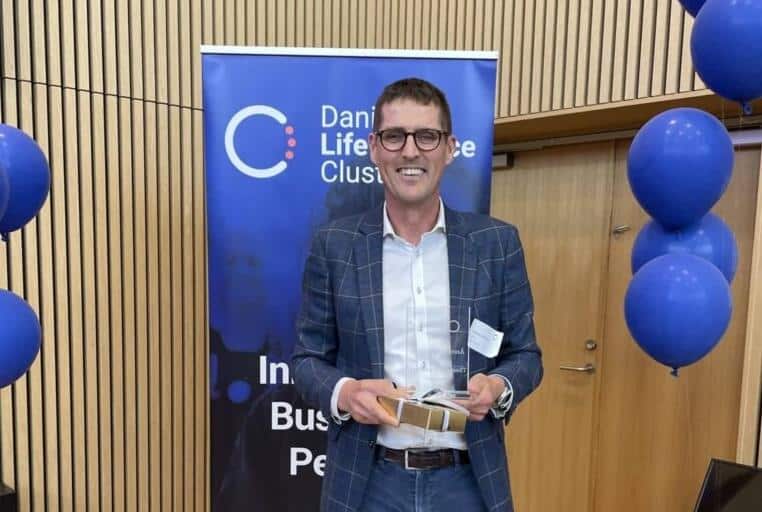
Monsenso CEO Thomas Lethenborg Named Enthusiast of the Year by Danish Life Science Cluster

Monsenso CEO Thomas Lethenborg Named Enthusiast of the Year by Danish Life Science Cluster

Copenhagen, Denmark 

We are proud to share that Thomas Lethenborg, CEO of Monsenso, has been recognised as “Enthusiast of the Year” in the Danish Life Science Cluster Awards 2025.

The award highlights Thomas’s visionary leadership and his dedication to fostering innovation and collaboration across the healthcare ecosystem. Together with Monsenso, he has been a first mover in digital mental health solutions, bridging public and private sectors and driving evidence-based approaches to support people living with mental health challenges.

The recognition also extends to Monsenso’s ongoing contributions to major innovation projects such as PhaseV Health Studies, PERSONAE, and MentBest, which aim to create meaningful, data-driven solutions for mental health and wellbeing.

Read the full announcement on the Danish Life Science Cluster website here.


To learn more or explore a pilot or integration, book a demo or get in touch via our website.


Denmark Completes 10-Year Plan for Psychiatry – Strengthening Mental Health for the Future

Denmark Completes 10-Year Plan for Psychiatry – Strengthening Mental Health for the Future

Copenhagen, Denmark 

The Danish Government has presented the final part of its comprehensive 10-year plan for psychiatry, a long-term initiative designed to secure better mental health services across the country. The new proposal builds on several years of investments and reforms and represents a turning point in how psychiatric care is organised and delivered in Denmark.

The plan’s ambition is clear: to ensure that all individuals living with mental health challenges can access timely, effective, and high-quality treatment, while also receiving support that enables them to thrive in everyday life.

Key elements of the plan include:

  • Earlier intervention and prevention: Strengthening outreach and ensuring that signs of mental illness are detected and addressed sooner.

  • More treatment capacity: Expanding resources in both child & adolescent psychiatry and adult psychiatry to meet rising demand.

  • Cross-sector collaboration: Closer integration between psychiatry, primary care, social services, and education, ensuring patients receive coordinated support across systems.

  • Focus on recovery and everyday life: Shifting attention from acute treatment alone to also supporting long-term recovery, rehabilitation, and reintegration into school, work, and community.

  • Better access and reduced inequality: Targeting efforts to ensure equal access to psychiatric services regardless of geography, social background, or economic status.

The plan underlines that psychiatry is not only a medical challenge but a societal one. Mental health must be supported not just in hospitals and clinics, but also in schools, workplaces, families, and communities.

How Monsenso Contributes

At Monsenso, we strongly welcome the government’s continued prioritisation of psychiatry. The principles set out in the 10-year plan align closely with our mission to empower individuals, clinicians, and healthcare systems through digital innovation.

Our digital health platform is already supporting psychiatric care across Denmark and internationally, and can help realise several of the government’s ambitions:

  • Early detection and intervention
    By capturing real-time patient-reported outcomes and digital biomarkers, the Monsenso solution helps clinicians identify changes in symptoms at an earlier stage. This enables timely support and prevents conditions from escalating.

  • Strengthening cross-sector collaboration
    The platform facilitates secure data sharing and communication between patients, relatives, and care teams across healthcare sectors. This ensures that information follows the patient, promoting coordinated treatment pathways.

  • Supporting recovery in everyday life
    Our mobile app empowers individuals to actively engage in their own treatment, track progress, and access coping strategies directly from home. This helps extend care beyond the clinic, improving continuity and supporting long-term recovery.

  • Promoting equality and accessibility
    Digital tools can help reduce geographic and social disparities by making care more accessible, particularly for those in remote areas or with limited ability to attend frequent in-person consultations.

    Building the Psychiatry of the Future

    The Danish Government’s 10-year plan for psychiatry represents a historic opportunity to strengthen mental health services for generations to come. Achieving these goals will require both systemic reforms and innovative technologies that can bridge the gap between patients’ daily lives and the healthcare system.

    Monsenso is proud to contribute to this transformation. For example, through PhaseV, a national innovation programme supported by Innovation Fund Denmark, Monsenso provides the digital backbone for decentralised, real-world clinical studies, including within psychiatry. By enabling patients to share daily health data from home and giving clinicians access to these insights in real time, the project demonstrates how digital tools can strengthen early intervention, improve patient engagement, and extend care beyond traditional settings.

    Beyond Denmark, Monsenso also contributes at the European level through projects such as Personae (developing blended care models for mental health) and MentBest (creating digital tools to prevent common mental disorders). Together, these initiatives highlight how digital innovation can support more patient-centred, proactive, and sustainable mental health systems — both nationally and internationally.


    To learn more or explore a pilot or integration, book a demo or get in touch via our website.


    Mental health app could help prevent depression in young people at high risk

    Mental health app could help prevent depression in young people at high risk

    A cognitive behavioural therapy (CBT) app, based on Monsenso’s digital health platform, has been found to significantly prevent increases in depression in young people who are at high risk – and could be implemented as a cost- effective, large-scale public mental health measure.

    Globally, concern is growing about the high and steadily increasing rates of anxiety and depression in young people. Effective and scalable ways of preventing poor mental health in this group are needed, and digital tools such as mobile apps have been proposed as part of the solution.

    Whilst there is emerging evidence for mental health apps being effective in treating anxiety and depression, the EcoWeB project led by the University of Exeter is the first to rigorously test a mental health app on such a large scale across four countries. Two linked papers published on Oct 4 in Lancet Digital Health report the results of the ECoWeB-PREVENT and ECoWeB-PROMOTE trials, which ran concurrently in the four-year study funded by Horizon 2020. Critically, these studies found that a CBT self-help app based on Monsenso’s digital health platform can protect vulnerable young people against depression.

    Professor Ed Watkins from the University of Exeter led the project and said: “For young people with elevated risk, our findings suggest the CBT app does have a preventative effect on depression and could have a public health benefit. Participants’ quality-of-life measures were better, and their reported work and social functioning was better.

    “However, we also found that it’s hard to make improvements in young people who are basically doing okay. Our findings add to the evidence that prevention for depression works best when we identify and select individuals who are more at risk, rather than take a more universal approach. This identification could be done by an online self-screening process or through professional referral.”

    CEO Thomas Lethenborg at Monsenso said: “We are happy with the outcomes of this study and see great potential for our platform based on this. It shows that our platform can be used to deliver cost-effective guidance and interventions at scale and that it can be used to enable large-scale, international decentralised trials collecting continuous real-world data from participants.”

    The aim of the EUR 4-million project was to test the effects of mobile apps in preventing depression and promoting mental well-being for young people aged 16 to 22. In one of the largest studies of its kind, 3,700 young people took part across the UK, Germany, Belgium, and Spain and were allocated into two trials based on their emotional competence abilities at the start of the study. That resulted in 1,200 young people with reduced emotional competency scores that confer increased risk for depression such as increased worry and overthinking going into one trial focused on prevention, whilst 2,500 without such risk went into the other trial focused on wellbeing promotion.

    Those two groups were then randomised in equal numbers to three different apps developed by the project based on Monsenso’s platform. There was a self-monitoring app where people can report their emotions every day, a self-help app that provided personalised training in emotional competence skills, and a self-help app based on CBT principles. Participants were then followed up at three months and 12 months to see how their wellbeing and depression symptoms changed.

    The trials found the CBT app prevented an increase in depression, relative to self-monitoring in the higher risk sample, but that there was no difference between any of the interventions in their effects for the lower risk sample.

    Professor Ed Watkins at University of Exeter said: “Our results suggest that even when young people used the self-help app just a few times, there was a small but meaningful benefit. Because the app is scalable to large numbers of people in a cost-effective way, these effects have potential value as a public health intervention, within a broader portfolio of digital and in-person services and interventions. Next steps are to identify the active ingredients of the app that were beneficial and to improve engagement and ongoing use of these elements.”

    The project involved 13 different partners, including two commercial companies – digital health platform provider Monsenso and German voice analysis company audEERING. The University of Exeter (UK), LMU Munich (Germany), Ghent University (Belgium), and Universitat Jaume I (Spain), were the main treatment development and trial sites. Meanwhile, the University of Oxford led on the qualitative analysis.

    The studies are titled ‘Emotional competence self-help app versus cognitive-behavioural self-help app versus self-monitoring app to prevent depression in young adults with elevated risk (ECoWeB PREVENT): an international, multicentre, parallel, open-label, randomised controlled trial‘ and ‘Emotional competence self-help mobile phone app versus cognitive behavioural self-help app versus self-monitoring app to promote mental wellbeing in healthy young adults (ECoWeB PROMOTE): an international, multicentre, parallel, open-label, randomised controlled trial’, and both are published in Lancet Digital Health. This work was supported by European Union Horizon 2020 Personalised Medicine SC1-PM-07–2017 grant agreement 754657.


    Click the button below for more information about the Monsenso solution.

    Monsenso signs new agreement with a leading pharmaceutical for a real-world data project in Denmark

    Monsenso signs new agreement with a leading pharmaceutical for a real-world data project in Denmark

    Monsenso signs a new agreement with a leading pharmaceutical company to implement its solution for decentralised patient-centric real-world data collection in a chronic disease area.

    Under the new agreement, Monsenso will deliver and support real-world patient data collection for a decentralised patient-centric study expected to take place over the next 12 months.

    The agreement and the solution delivered build on Monsenso’s existing platform, which will be customised to support the specific study and the disease of the patient group. It also includes developing new features to support the patient-centric real-world data study, which will position Monsenso’s solution even stronger in the future.

    “With this project, we hope to contribute to getting deeper learnings on which treatments work for which patients by continuously engaging and collecting real-world data from patients.

    The potential of this engagement is significant – both with the pharmaceutical company itself across other geographies and disease areas as well as with similar companies.” says Thomas Lethenborg, CEO of Monsenso.

    The project comes one year into the start of the PhaseV research project, where Monsenso further develops its solution to fully support decentralised real-world data studies and trials in collaboration with leading pharmaceutical companies and research institutions.

    Click the button below for more information about the Monsenso solution.